What We Did in our Spare Time
What did US soldiers in Vietnam do in their spare time during the Vietnam War?
Civilians and peace time military personnel can set up a daily routine. In the “traditional wars” from Vietnam back; in which there were NO cell phones, computers, GPS systems, mini-TV’s, equal opportunity employment, environmental bullets, advanced safety military protection gear (face shields, knee pads, night vision goggles attached to the protective headgear), etc. etc. GI’s in the Vietnam War, had to do pretty much what his forefathers did in the Korean War, WWII, WWI, Spanish-American War of 1898, the US Frontier Wars, the US Civil War, etc.
And that was (for the men in the field): Sleep when ever possible, because there was NO daily routine. Shooting or explosions could come at any time, from any direction. Or “movement”. If anyone saw or heard any “movement”, action could commence at any split second. Sleep (or rest) was always wanted. Food and drink, was a constant, especially food. The army only supplied “C” rations in the field (canned food) could be heated (we found other sources to cook our food), army issued “heat tablets” took too long, wouldn’t light using a cigarette, and put out eye burning fumes when used in a bunker or inside an armored vehicle. “C” rations had to be eaten COLD at night-time because of “night discipline”…lights get shot at during the night, and worse they could draw mortar fire. Then your buddies will be very upset with the GI who showed the light.
Other than sleeping, eating, a cold beer (or soda) was excellent entertainment. Cigarettes were part of life. Inside of each “C” ration meal was factory Marlboro, Salem, Pall Malls, Camel cigarettes. SP (Sundries Paks) came Viceroy, Pall Malls, Marlboro, Salem, by the carton! Reading paperback books, and playing cards was common (Gambling). Fishing in rivers was popular, some GI’s hunted deer and other small game (no fishing/hunting license REQUIRED!).
SOURCE: wikianswers.com
Veterans Day Reenlistment
I was in Las Vegas Monday November 11, 2013 (Veterans Day) and attended the Jabbawockeez show at the Luxor. Sitting directly accross from me were about 8 Army Soldiers in uniform. I noticed a 4th Infantry Division patch on the soldier nearest to me. I got up and went over to them and told them I was also in the 4th Infantry Division. We chatted for awhile and then did the “Thank you for your service” bit before I returned to my seat.
Just prior to the show an announcement was made that two of the soldiers were reenlisting and the ceremony would be on stage. Their Captain (who I previously spoke to) performed the ceremony. They were stationed at Ft. Carson and are to deploy to Afghanistan. Here are some of the pictures.
Click on a picture for a slideshow


Honolulu Celebrates End of WWII
This wonderful video was taken August 14, 1945 in Honolulu Hawaii the Day Japan surrendered and was then misplaced or lost. Following his death his daughter discovered it. The quality is excellent and the music background is really wonderful. Do yourself a favor watch this as it is a vivid piece of our history and as it says at the end the sacrifices made by our parents and other good citizens are the reason we still speak English.
Great video of a Spontaneous Victory Parade in Honolulu in 1945. Take a look at this video-absolutely fabulous!
Notice the cars and jeeps, youth.
The guys in khaki or gray shirts and black ties are Navy officers or chiefs. The rest are Army or Marine. How young they all were to do what they did.
This guy really captured a moment in history! This is a super video of a time past – we need to remember and be THANKFUL.
Check out the color fidelity. It’s not bad for 1945. Nothing will ever compare with Kodachrome film.
Click below for the video:
Great Escape Tunnel
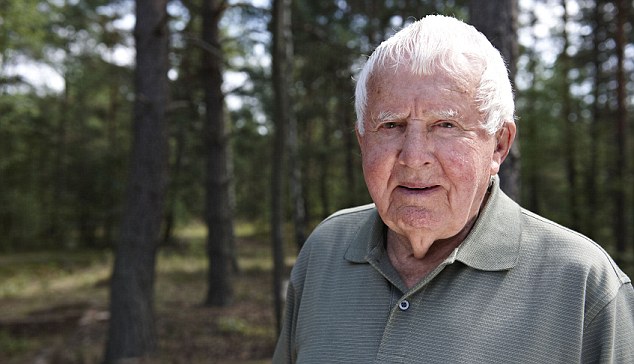
Untouched for almost seven decades, the tunnel used in the Great Escape has finally been unearthed.
The 111-yard passage nicknamed ‘Harry’ by allied prisoners was sealed by the Germans after the audacious break-out from the POW camp Stalag Luft III in western Poland.
Despite huge interest in the subject, encouraged by the film starring Steve McQueen, the tunnel remained undisturbed over the decades because it was behind the Iron Curtain and the Soviet authorities had no interest in its significance.
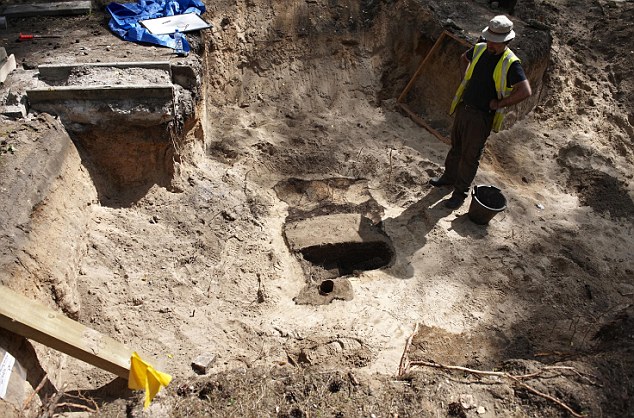
But at last British archaeologists have excavated it, and discovered its remarkable secrets.
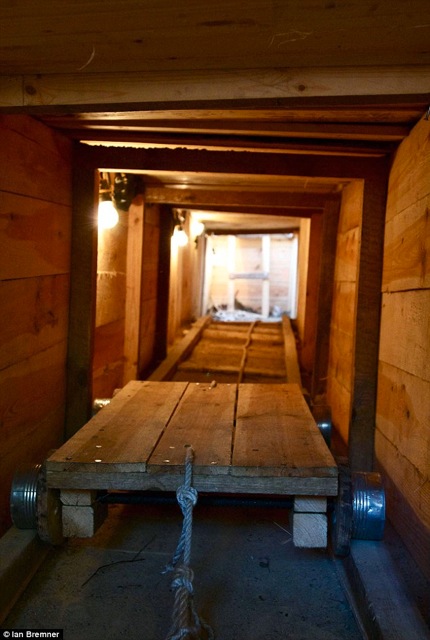
Many of the bed boards which had been joined together to stop it collapsing were still in position.
And the ventilation shaft, ingeniously crafted from used powdered milk containers known as Klim Tins, remained in working order.
Scattered throughout the tunnel, which is 30ft below ground, were bits of old metal buckets, hammers and crowbars which were used to hollow out the route.
A total of 600 prisoners worked on three tunnels at the same time. They were nicknamed Tom, Dick and Harry and were just 2 ft. square for most of their length.
It was on the night of March 24 and 25, 1944, that 76 Allied airmen escaped through Harry.
Barely a third of the 200 prisoners – many in fake German uniforms and civilian outfits and carrying false identity papers – who were meant to slip away managed to leave before the alarm was raised when escapee number 77 was spotted.
Only three made it back to Britain. Another 50 were executed by firing squad on the orders of Adolf Hitler, who was furious after learning of the breach of security.
In all, 90 boards from bunk beds, 62 tables, 34 chairs and 76 benches, as well as thousands of items including knives, spoons, forks, towels and blankets, were squirrelled away by the Allied prisoners to aid the escape plan under the noses of their captors.
Although the Hollywood movie suggested otherwise, NO Americans were involved in the operation. Most were British, and the others were from Canada, (all the tunnellers were Canadian personnel with backgrounds in mining) Poland, New Zealand, Australia, and South Africa.
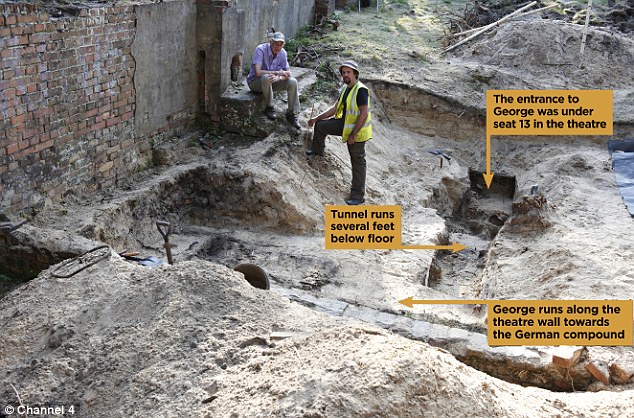
The latest dig, over three weeks in August, located the entrance to Harry, which was originally concealed under a stove in Hut 104.
The team also found another tunnel, called George, whose exact position had not been charted. It was never used as the 2,000 prisoners were forced to march to other camps as the Red Army approached in January 1945.
Watching the excavation was Gordie King, 91, and RAF radio operator, who was 140th in line to use Harry and therefore missed out.
‘This brings back such bitter-sweet memories,’ he said as he wiped away tears. ‘I’m amazed by what they’ve found.’
Thanks to Ron Draper for sending us the information. Hoo-Rah
Donut Dollies
During the Vietnam War, Red Cross workers provided services to U.S. military personnel and assisted Vietnamese refugees (1962-1974). In 1962, the American Red Cross sent its first paid field staff to Vietnam to assist the growing number of servicemen at various bases and hospitals. At the height of its involvement in 1968, 480 field directors, hospital personnel, and recreation assistants served throughout Southeast Asia. Red Cross workers, who provided 1.9 million services to U.S. military personnel, shared the hardships and privations of war with the soldiers. Five Red Cross staff members gave their lives, and many others were injured as they helped servicemen resolve personal problems or get home when emergency leave was granted due to death or serious illness in their immediate family. Continue reading
Nurses of the Vietnam War
Like many of the men going over to Vietnam to serve their country, young women from all over the nation volunteered to serve as nurses in the hospitals and medical facilities in South Vietnam. These women volunteered for a variety of reasons: to serve their country, to help the service men who were wounded, to receive training and an education, to further their military careers, to prove themselves or just to have an adventure. The nurses served in the hospital ships of the Navy, the airlift helicopters and airplanes of the Air Force and the hospitals and field hospitals of the Army. They arrived in Vietnam with various levels of nursing experience, from newcomers to the field with barley six months of Nursing under their belts to experienced veterans of twenty plus years. Usually the more confident and experienced the nurse, the better they were able to cope with the stress and the sheer number of casualties they treated on a daily basis. Continue reading
Vietnam War Dogs
War Dog Team
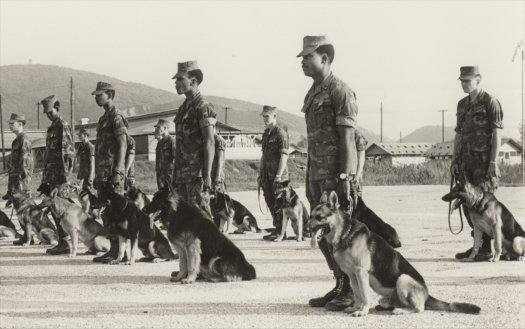
Between the years 1964 and 1973, America had deployed an estimated 4,000 war dogs and 10,000 handlers to help defend South Vietnam from invasion from North Vietnam. During the ground war, Veterinarians and Vet Techs were also deployed throughout South Vietnam to help manage the diets and medial health of the war dogs.
The success of the war dogs and handlers walking point, tracking, guarding, patrolling, and protecting American lives and military assets, ultimately reduced the enemy’s capacity for surprise attacks. As a result, the enemy placed a price tag on the heads of the war dog teams and hunted them with extreme prejudice. Continue reading
 Charlie Company Vietnam 1966-1972