Year: 2013
What is a Firebase?
The nonsoldier doesn’t know what a firebase is and to explain it I went to the internet to get some information. So here is the story:
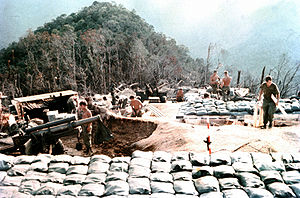
A fire support base (FSB, firebase or FB) is a military encampment designed to provide indirect fire artillery fire support to infantry operating in areas beyond the normal range of direct fire support from their own base camps.
Click to enlarge
An FSB was normally a permanent encampment, though many were dismantled when the units that they supported moved. Their main components varied by size: small bases usually had a battery of six 105 millimeter or 155mm howitzers, a platoon of engineers permanently on station, a Landing Zone (LZ), a Tactical Operations Center (TOC), an aid station staffed with medics, a communications bunker, and a company of infantry. Large FSBs might also have two artillery batteries, and an infantry battalion. Continue reading
Private Military Contractors in Vietnam
Throughout history, military forces have depended on civilian contractors of one sort or another to give their military personnel flexibility, or to fulfill logistical and support functions that soldiers do not need to do.
In ancient and medieval history up until at least the 1600s, it was not unusual to depend on armies made up primarily of mercenaries and civilian support. George Washington’s Continental Army depended on civilians for a variety of support roles: transportation, carpentry, engineering, food and medicine. These were logistical functions, considered either menial or too specialized to expect soldiers to do them. Frenchman Marquis de Lafayette was one of the first Military Contractors in the US. In 1777, he purchased a ship, and with a crew of adventurers set sail for America to fight in the American Revolution against British colonial rule. Continue reading
10 Interesting Facts Today About Vietnam
10 Interesting or Trivial Facts about Vietnam you Probably Didn’t Know
#1: Various Names
- Vietnam is the variation of Nam Viet, which means Southern Viet. Viet Nam was used commonly long ago and is still referred the same way by the United Nations and the Vietnamese Government.
#2: Literacy
- Vietnam has attained 94% literacy though it is classified as a developing country.
- Children do not go to schools hearing bells. Schools let them know when it is time by using traditional gongs.
- Even, the unemployment rates are very low for a developing country. Continue reading

What We Did in our Spare Time
What did US soldiers in Vietnam do in their spare time during the Vietnam War?
Civilians and peace time military personnel can set up a daily routine. In the “traditional wars” from Vietnam back; in which there were NO cell phones, computers, GPS systems, mini-TV’s, equal opportunity employment, environmental bullets, advanced safety military protection gear (face shields, knee pads, night vision goggles attached to the protective headgear), etc. etc. GI’s in the Vietnam War, had to do pretty much what his forefathers did in the Korean War, WWII, WWI, Spanish-American War of 1898, the US Frontier Wars, the US Civil War, etc.
And that was (for the men in the field): Sleep when ever possible, because there was NO daily routine. Shooting or explosions could come at any time, from any direction. Or “movement”. If anyone saw or heard any “movement”, action could commence at any split second. Sleep (or rest) was always wanted. Food and drink, was a constant, especially food. The army only supplied “C” rations in the field (canned food) could be heated (we found other sources to cook our food), army issued “heat tablets” took too long, wouldn’t light using a cigarette, and put out eye burning fumes when used in a bunker or inside an armored vehicle. “C” rations had to be eaten COLD at night-time because of “night discipline”…lights get shot at during the night, and worse they could draw mortar fire. Then your buddies will be very upset with the GI who showed the light.
Other than sleeping, eating, a cold beer (or soda) was excellent entertainment. Cigarettes were part of life. Inside of each “C” ration meal was factory Marlboro, Salem, Pall Malls, Camel cigarettes. SP (Sundries Paks) came Viceroy, Pall Malls, Marlboro, Salem, by the carton! Reading paperback books, and playing cards was common (Gambling). Fishing in rivers was popular, some GI’s hunted deer and other small game (no fishing/hunting license REQUIRED!).
SOURCE: wikianswers.com
Veterans Day Reenlistment
I was in Las Vegas Monday November 11, 2013 (Veterans Day) and attended the Jabbawockeez show at the Luxor. Sitting directly accross from me were about 8 Army Soldiers in uniform. I noticed a 4th Infantry Division patch on the soldier nearest to me. I got up and went over to them and told them I was also in the 4th Infantry Division. We chatted for awhile and then did the “Thank you for your service” bit before I returned to my seat.
Just prior to the show an announcement was made that two of the soldiers were reenlisting and the ceremony would be on stage. Their Captain (who I previously spoke to) performed the ceremony. They were stationed at Ft. Carson and are to deploy to Afghanistan. Here are some of the pictures.
Click on a picture for a slideshow


Honolulu Celebrates End of WWII
This wonderful video was taken August 14, 1945 in Honolulu Hawaii the Day Japan surrendered and was then misplaced or lost. Following his death his daughter discovered it. The quality is excellent and the music background is really wonderful. Do yourself a favor watch this as it is a vivid piece of our history and as it says at the end the sacrifices made by our parents and other good citizens are the reason we still speak English.
Great video of a Spontaneous Victory Parade in Honolulu in 1945. Take a look at this video-absolutely fabulous!
Notice the cars and jeeps, youth.
The guys in khaki or gray shirts and black ties are Navy officers or chiefs. The rest are Army or Marine. How young they all were to do what they did.
This guy really captured a moment in history! This is a super video of a time past – we need to remember and be THANKFUL.
Check out the color fidelity. It’s not bad for 1945. Nothing will ever compare with Kodachrome film.
Click below for the video:
Great Escape Tunnel
Untouched for almost seven decades, the tunnel used in the Great Escape has finally been unearthed.
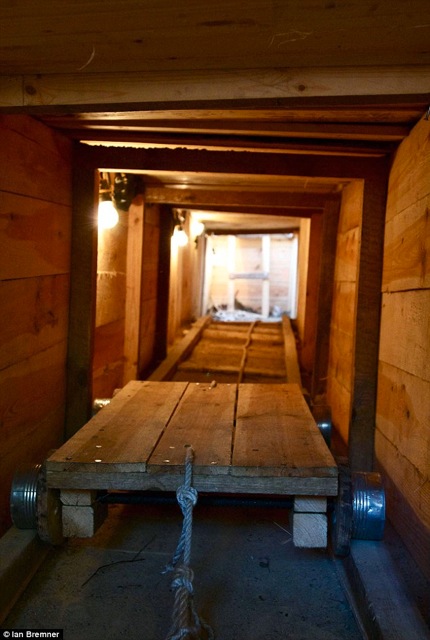
The 111-yard passage nicknamed ‘Harry’ by allied prisoners was sealed by the Germans after the audacious break-out from the POW camp Stalag Luft III in western Poland.
Despite huge interest in the subject, encouraged by the film starring Steve McQueen, the tunnel remained undisturbed over the decades because it was behind the Iron Curtain and the Soviet authorities had no interest in its significance.
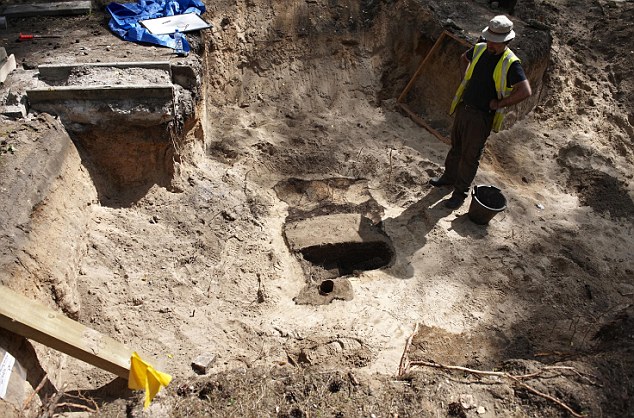
But at last British archaeologists have excavated it, and discovered its remarkable secrets.
Many of the bed boards which had been joined together to stop it collapsing were still in position.
And the ventilation shaft, ingeniously crafted from used powdered milk containers known as Klim Tins, remained in working order.
Scattered throughout the tunnel, which is 30ft below ground, were bits of old metal buckets, hammers and crowbars which were used to hollow out the route.
A total of 600 prisoners worked on three tunnels at the same time. They were nicknamed Tom, Dick and Harry and were just 2 ft. square for most of their length.
It was on the night of March 24 and 25, 1944, that 76 Allied airmen escaped through Harry.
Barely a third of the 200 prisoners – many in fake German uniforms and civilian outfits and carrying false identity papers – who were meant to slip away managed to leave before the alarm was raised when escapee number 77 was spotted.
Only three made it back to Britain. Another 50 were executed by firing squad on the orders of Adolf Hitler, who was furious after learning of the breach of security.
In all, 90 boards from bunk beds, 62 tables, 34 chairs and 76 benches, as well as thousands of items including knives, spoons, forks, towels and blankets, were squirrelled away by the Allied prisoners to aid the escape plan under the noses of their captors.
Although the Hollywood movie suggested otherwise, NO Americans were involved in the operation. Most were British, and the others were from Canada, (all the tunnellers were Canadian personnel with backgrounds in mining) Poland, New Zealand, Australia, and South Africa.
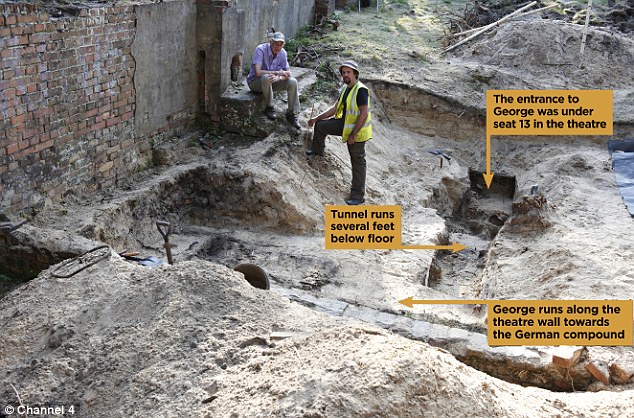
The latest dig, over three weeks in August, located the entrance to Harry, which was originally concealed under a stove in Hut 104.
The team also found another tunnel, called George, whose exact position had not been charted. It was never used as the 2,000 prisoners were forced to march to other camps as the Red Army approached in January 1945.
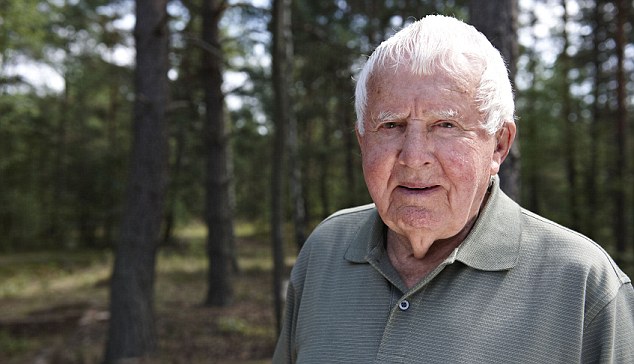
Watching the excavation was Gordie King, 91, and RAF radio operator, who was 140th in line to use Harry and therefore missed out.
‘This brings back such bitter-sweet memories,’ he said as he wiped away tears. ‘I’m amazed by what they’ve found.’
Thanks to Ron Draper for sending us the information. Hoo-Rah
 Charlie Company Vietnam 1966-1972