This the Atlanta, GA Airport
Thank You Delta Airline employees
Thanks to Ron Draper for the link, Hoorah
Thanks to Ron Draper for the link, Hoorah
Rules for Kickin’ Ass:
Dear Civilians, ‘We know that the current state of affairs in our great nation has many civilians up in arms and excited to join the military.
For those of you who can’t join, you can still lend a hand. Here are a few of the areas where we would like your assistance: Continue reading
Air Force Security Police Squadron K-9 sentry dog handlers patrolled the perimeter of Da Nang Air Base from the early days of the war. These War Dogs were posted at the bases’ interior, along runways, and the perimeter, along with the marines.
…Things started to settle down and I began to fall into the routine: Check the K-9 roster after coming off post to see what assignment Blackie and I had the next evening, go to chow, hit the rack–or have a few beers and then hit the rack. Try to get as much sleep as possible before the heat and noise made it impossible to sleep, (usually around 11 AM). Continue reading


By the end of 1967 an American Army of 485,000 soldiers and marines, backed up by an enormous logistical system, had deployed in country; and officials talked brightly that there was now “light at the end of the tunnel.”
President Johnson, National Security Adviser Walt Rostow, Secretary of State Rusk, JCS Chairman Wheeler, CINCPAC Adm. Ulysses S. Grant Sharp, Ambassador Bunker, and MACV commander General Westmoreland all appeared confident that American ground and air operations were so grinding down Communist forces in Vietnam that they would not be able to maintain anything more than a limited war of attrition. The pronounced gulf between their beliefs and reality deserves representative highlighting. Continue reading
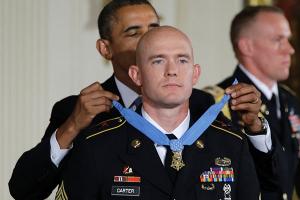 Army Staff. Sgt Ty Carter on Monday became the fifth living recipient of the Medal of Honor from the wars in Iraq and Afghanistan for his valor in helping stop a surrounding enemy force from overrunning a remote outpost in Afghanistan.
“It was chaos, a blizzard of bullets and steel” that Carter and the other defenders faced at Combat Outpost Keating in the 12-hour firefight, President Obama said. But the Americans pushed and ultimately retook the camp. Continue reading
1. Search and destroy,
2. Clearing,
3. Security.
These terms and the concepts they described were new, and like most new names and ideas, they were understood by some and misunderstood by others. Best known and most misunderstood was search and destroy. Search and destroy operations began in 1964, before U.S. ground forces were committed. These operations were conducted to locate the North Vietnamese Army and Viet Cong main force units in and around their base areas and to attack them by fire and maneuver. Since enemy infiltration of the populated areas depended heavily on the availability of base areas near the population centers, destruction of close-in base areas received priority attention. Continue reading
A free-fire zone was an area that had been cleared of all civilians, with any remaining people assumed to be hostile forces. “Free-fire zone” is also one of those terms that if repeated often enough will make folks dive under the coffee table and hide their heads. Only in Vietnam was political clearance required prior to placing fire on the enemy, that is, clearance from ARVN officials was required for all but clearly defensive fire except into a “free-fire zone.” A free-fire zone, however, did not relieve the commander of his concurrent obligation to comply with the laws of war, operating authorities, and the rules of engagement. Continue reading
 Charlie Company Vietnam 1966-1972