New Civilian Job

A former Sergeant, having served his time with Charlie Company, took a new job as a school teacher, but just before the school year started, he injured his back. He was required to wear a plaster cast around the upper part of his body. Fortunately, the cast fit under his shirt and wasn’t even noticeable.

On the first day of class, he found himself assigned to the toughest students in the school. The smart mouthed punks, having already heard the new teacher was a former Charlie Company veteran, were leery of him and decided to see how tough he really was, before trying any pranks.

Walking confidently into the rowdy classroom, the new teacher opened the window wide and sat down at his desk.

When a strong breeze made his tie flap, he picked up a stapler and promptly stapled the tie to his chest.

There was dead silence.

He has had no trouble with discipline this year.
Last Days of The Infantry in Vietnam 1972

By the final full year of the war, American grunts were a rarity in the field.  The last of them would die by enemy action in early June.  For light wepons infantrymen and their constant companions – mortarmen, combat medics, armor recon and crewmen, artillery forward observers and their field radio operators – it was a lonely end.  It was the same for a handful of Special Forces advisers.  Three task forces would close out GI ground operations. Continue reading

Top 10 Things Your Combat Vet Wants You to Know

Top 10 Things Your Combat Vet Wants You to Know

by Regina Bahten

I’m a psychiatrist. Every day I listen to my combat veterans as they struggle to return to the “normal” world after having a deeply life-changing experience. I do everything I can to help them. Sometimes that can involve medications, but listening is key. Sometimes a combat veteran tells me things that they wish their families knew. They have asked me to write something for their families, from my unique position as soldier, wife, and physician. These are generalizations; not all veterans have these reactions, but they are the concerns most commonly shared with me.

(Author’s note: obviously warriors can be female — like me — and family can be male, but for clarity’s sake I will write assuming a male soldier and female family.) Continue reading

Kit Carson Scouts

Kit Carson Scouts were former Vietcong guerrillas who had “rallied” to the government, frequently under the Chieu Hoi Program, and who were willing to act as scouts for U.S. units.

New scouts would be closely watched and observed with suspicion, for they could not always be trusted. Some “rallied” only to work for the Vietcong as spies or to lead U.S. units into traps. Though, most were very reliable, risking and often losing their lives for the units they served. Continue reading

The Ho Chi Minh Trail

The Ho Chi Minh Trail was a complex web of different jungle paths that enabled communist troops to travel from North Vietnam to areas close to Saigon. It has been estimated that the National Liberation Front received sixty tons of aid per day from this route. Most of this was carried by porters. Occasionally bicycles and ponies would also be used.

At regular intervals along the route, the NLF built base camps. As well as providing a place for them to rest, the base camps provided medical treatment for those who had been injured or had fallen ill on the journey. Continue reading

Chieu Hoi Program

Efforts to destroy the National Liberation Front (NLF) included the “Chieu Hoi” (Open Arms) amnesty program begun at the insistence of American and British advisers, including Sir Robert Thompson.

The program, like all others in Vietnam, generated remarkable statistics—almost 160,000 deserters and 11,200 weapons turned in—but only meager results. The program was conducted in classic American fashion with leaflets dropped from the air in NLF-controlled areas and Vietnamese psyops (psychological operations) personnel haranguing peasants via bullhorn from hovering helicopters. Continue reading

One Veteran’s Heroic Quest

COLUMN ONE
Los Angeles Times
October 4, 2012

One veteran’s heroic quest

Doug Sterner has for 14 years been doing what the Pentagon has failed to do: catalog all 350,000 recipients of top medals of valor.

BY DAVID ZUCCHINO REPORTING FROM ALEXANDRIA, VA.

*************************************************************************************

Doug Sterner drives from his cluttered apartment here to the Navy Yard in Washington, D.C., carrying a portable photocopier and a belief in American heroes.

Inside the Navy archives, he flips through thousands of typed index cards detailing bravery in battle. Sterner pulls out a card and starts reading. He’s mesmerized by this story: Continue reading

U.S. Allies in the Vietnam War

Australia

Because of its charter membership in the Southeast Asia Treaty Organization, Australia found herself drawn into the American sphere of influence in the Pacific. And it was a role she did not dislike. After the French defeat at Dien Bien Phu in 1954, the Australians progressively warned the United States that the fall of South Vietnam would threaten democracies throughout Asia. Australian officials believed the domino theory. Continue reading

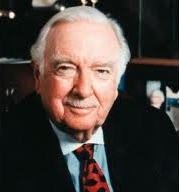
Walter Cronkite

Rising through the journalistic ranks, Walter Cronkite became the preeminent media figure of the 1960s and 1970s as correspondent and anchorman for CBS Television. Born in St. Joseph, Missouri, in 1916, Cronkite was a correspondent for United Press in World War II and joined CBS in 1950, serving as anchor and managing editor of the “CBS Evening News,” 1962-81. Cronkite was extensively watched and respected, and his coverage and reporting of Vietnam was seen as both reflecting and influencing American public opinion. Continue reading