China Involvement in the Vietnam War

China Involvement in the Vietnam War

Far before the Vietnam War started, China had ties with both Japan and Vietnam. When Vietnam was against war with France in the mid 1900’s, China helped them with military power and financial power. Hundreds of military equipment and weapons were provided by China. China has been known to help Korea as well in terms of warfare and politics. America and China had affiliations as well during the time of the Vietnam War, but none of it was related to the actual war that was taking place. China was shipping out tons of products to North America on a daily basis. Thousands of tons of food products would be shipped out from China each and every month. None of this was affected by the Vietnam War as people would have expected. Continue reading

Pearl Harbor

In Honor of December 7, 1941
Pearl

Three Mistakes at Pearl Harbor

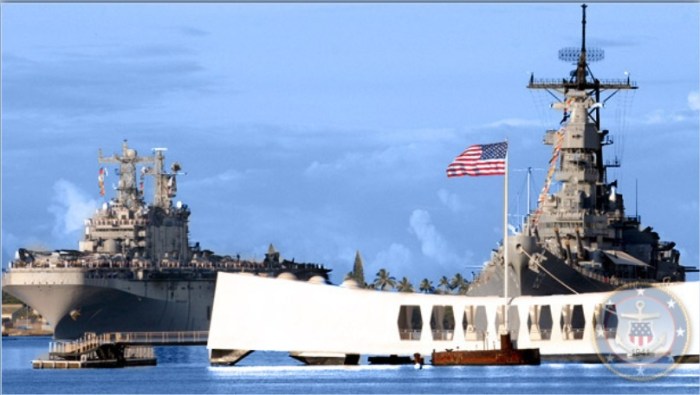
Sunday, December 7th, 1941–Admiral Chester Nimitz was attending a concert in Washington D.C. He was paged and told there was a phone call for him. When he answered the phone, it was President Franklin Delano Roosevelt on the phone. He told Admiral Nimitz that he (Nimitz) would now be the Commander of the Pacific Fleet.

Admiral Nimitz flew to Hawaii to assume command of the Pacific Fleet. He landed at Pearl Harbor on Christmas Eve, 1941. There was such a spirit of despair, dejection and defeat–you would have thought the Japanese had already won the war. On Christmas Day, 1941, Adm. Nimitz was given a boat tour of the destruction wrought on Pearl Harbor by the Japanese.. Big sunken battleships and navy vessels cluttered the waters everywhere you looked.

As the tour boat returned to dock, the young helmsman of the boat asked, “Well Admiral, what do you think after seeing all this destruction?” Admiral Nimitz’s reply shocked everyone within the sound of his voice. Admiral Nimitz said,

The Japanese made three of the biggest mistakes an attack force could ever make, or God was taking care of America . Which do you think it was?”

Shocked and surprised, the young helmsman asked, “What do mean by saying the Japanese made the three biggest mistakes an attack force ever made?”

Nimitz explained:

Mistake number one: the Japanese attacked on Sunday morning. Nine out of every ten crewmen of those ships were ashore on leave. If those same ships had been lured to sea and been sunk–we would have lost 38,000 men instead of 3,800.

Mistake number two: when the Japanese saw all those battleships lined in a row, they got so carried away sinking those battleships, they never once bombed our dry docks opposite those ships. If they had destroyed our dry docks, we would have had to tow every one of those ships to America to be repaired. As it is now, the ships are in shallow water and can be raised. One tug can pull them over to the dry docks, and we can have them repaired and at sea by the time we could have towed them to America . And I already have crews ashore anxious to man those ships.

Mistake number three: every drop of fuel in the Pacific theater of war is in top-of-the-ground storage tanks five miles away over that hill. One attack plane could have strafed those tanks and destroyed our fuel supply. That’s why I say the Japanese made three of the biggest mistakes an attack force could make or God was taking care of America .

President Roosevelt had chosen the right man for the right job. We desperately needed a leader that could see silver linings in the midst of the clouds of dejection, despair and defeat.

There is a reason that our national motto is, IN GOD WE TRUST.

CLICK HERE for pictures from Life Magazine.

Combat Air Assaults

Combat Air Assaults

The “combat air assault” was the zenith of the attack phase of air mobility.  A combat air assault, as a tactical mission, was more than merely transporting troops from point A to point B by helicopters.  Once the enemy was located and contact was made, troops could be swiftly deployed by helicopters from less critical situations and concentrated at the point of battle. Continue reading

Military Slang Terms

Military slang is colloquial language used by and associated with members of various military forces. This page lists slang words or phrases that originate with military forces, are used exclusively by military personnel, or are strongly associated with military organizations.

A number of military slang terms are acronyms. These include SNAFU, SUSFU, FUBAR and similar terms used by various branches of the United States military during World War II and beyond. Continue reading

Commemorating the War

Commemorating the War

The Vietnam Memorial, like the POW-MIA flag, stands as the physical embodiment of the desire of the American people to understand the meaning of the Vietnam conflict and remember the men and women who took part in it. During the late 1970s both public and private efforts began to congeal around the idea of establishing a monument to the 58,000 American dead in Vietnam. Influenced by the film The Deer Hunter (1978), Jan Scruggs, a Vietnam veteran, teamed up with two other servicemen in 1979 to create a non-profit organization known as the Vietnam Veterans Memorial Fund. Continue reading

Reading of the Wall Names

Vietnam Veterans Memorial Fund – Reading of the Wall Names

By Charlie Shyab

In early fall I received the information that they were going to read the Wall Names for the 3rd time since the building of the wall. I have been supporting the fund for many years and also attending the ceremonies celebrating the lives of those who gave their all. So when they emailed me to know if I would be interested, I forwarded the info to Dennis Ziegler and when he told me that he was on board and he would be reading his brother’s name (Roger Ziegler) at 8:10 am I told him I had the 8:08 slot. Continue reading