I wish everyone a very Happy Thanksgiving.
Here is the menu for the 4th Infantry Division for Thanksgiving 1967 in Vietnam. Charlie Company was in the field so they brought us hot food in containers by helicopter.
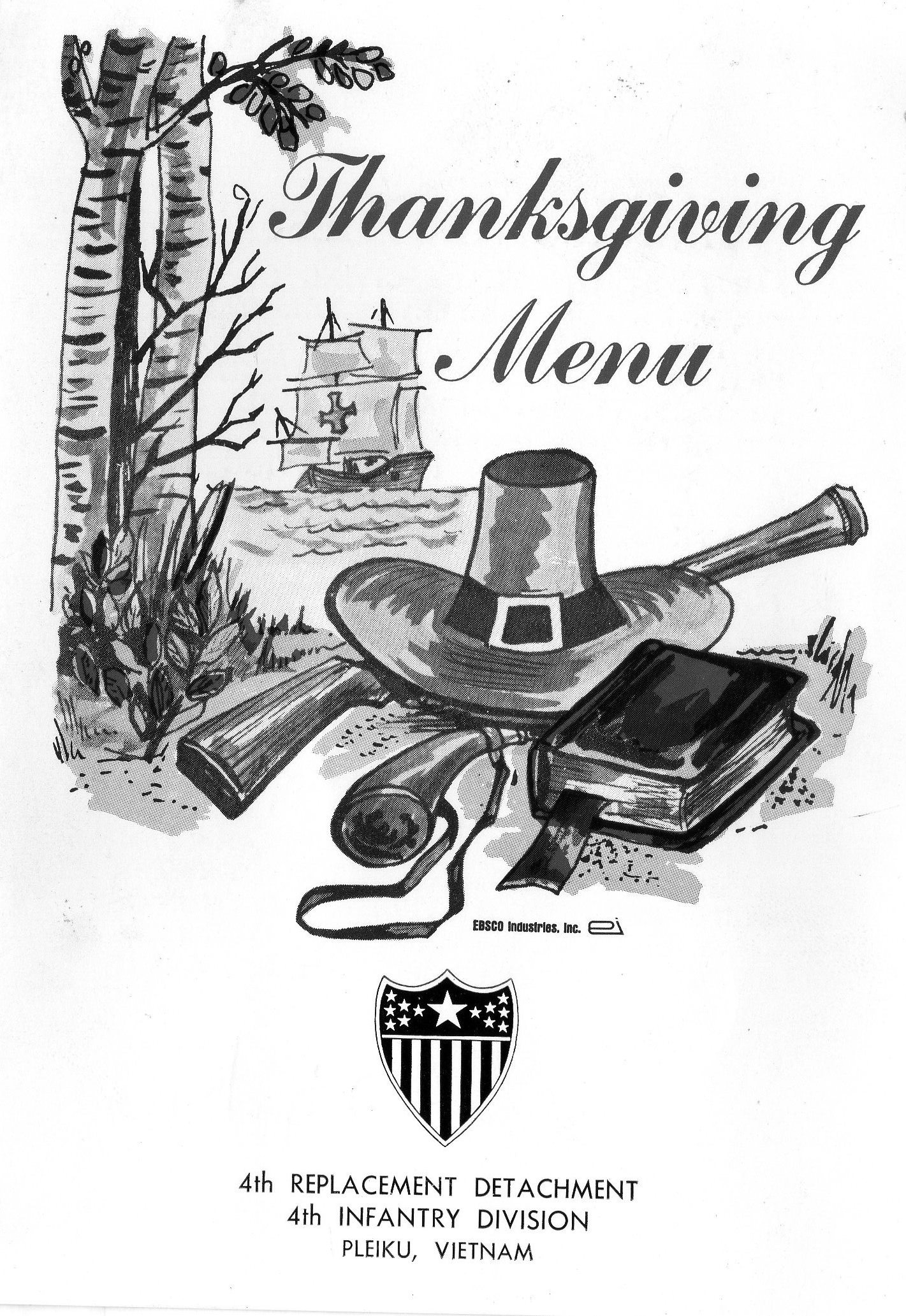
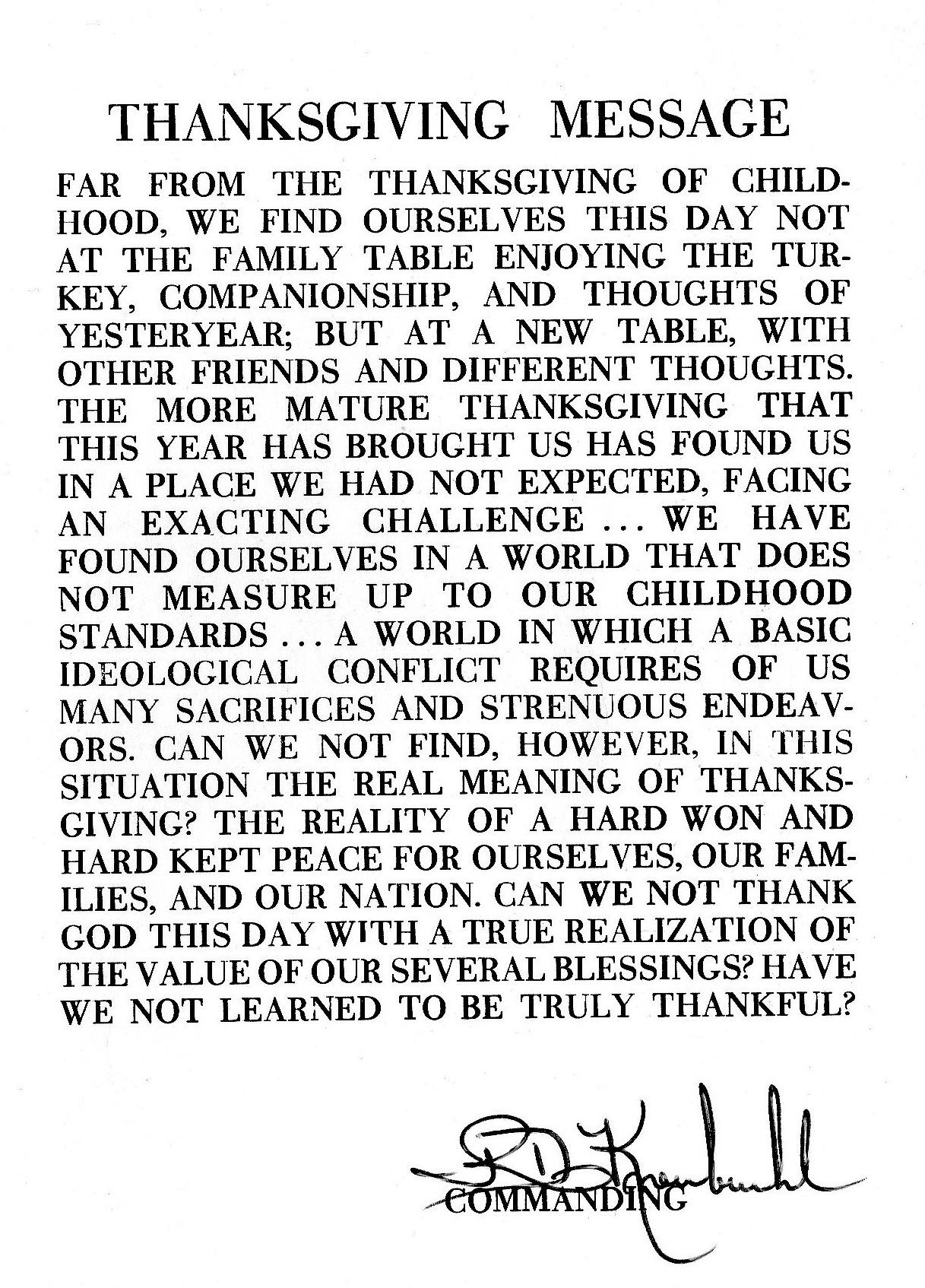
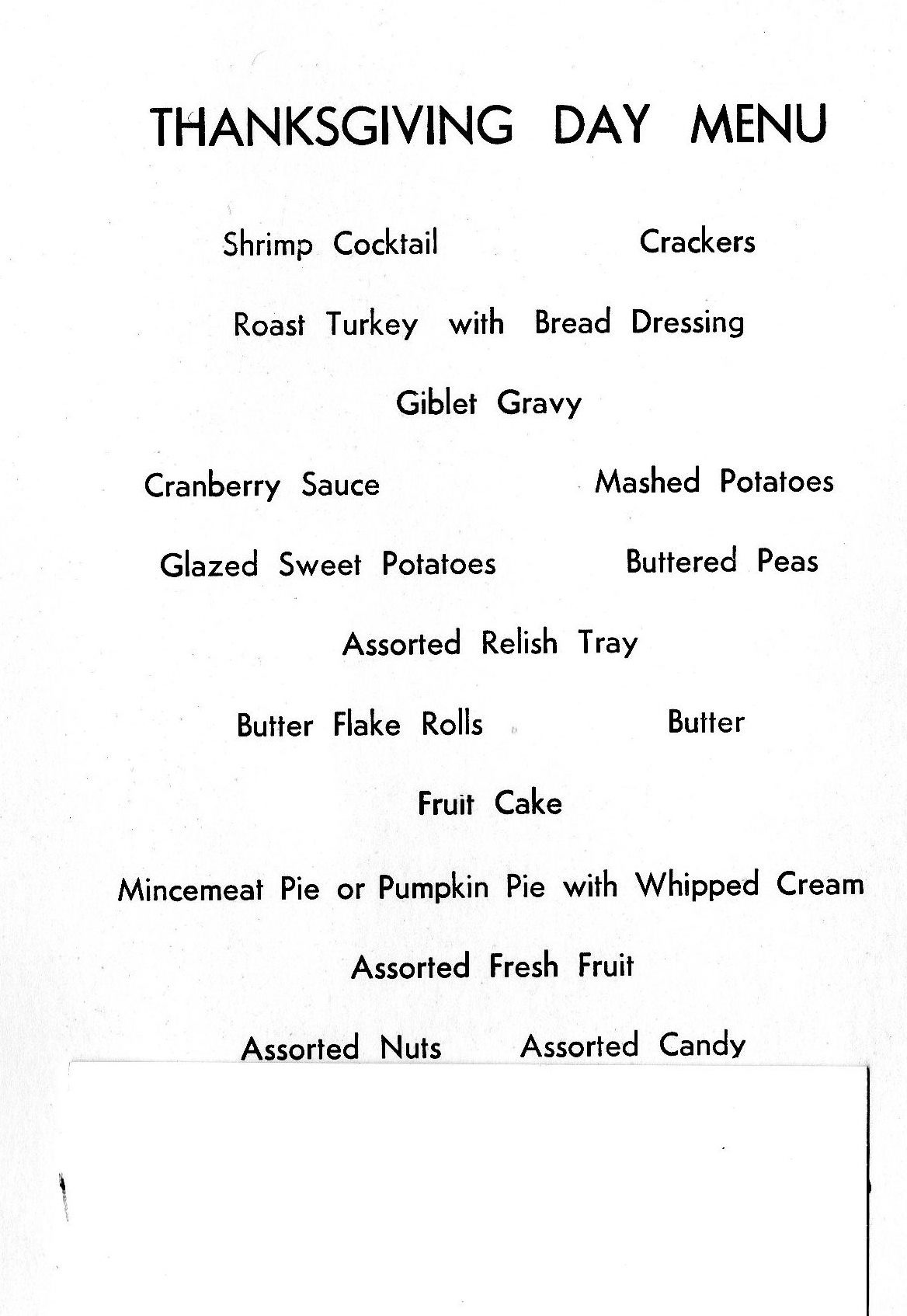
Thanks to Doc for the menu. Hoooah
Thanks to Doc for the menu. Hoooah
‘Lone Survivor’ former Navy SEAL Marcus Luttrell spoke to the University of Alabama football team before their victory over then-No. 1 Mississippi State. We would normally write something to go along with this, but this time you just need to drop everything you’re doing and watch.
Thanks to Doc for the link. Hooah
The Difference Between Rangers and Special Forces
By Jack Murphy
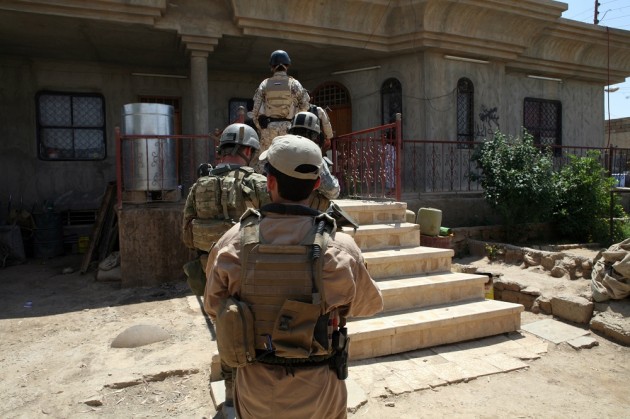
“Big dumb Ranger stomping through the woods,” a retired Sergeant Major from 5th Special Forces Group said with a smirk to me after an After Action Review in Robin Sage. Robin Sage is the culmination exercise at the end of the Special Forces Qualification Course, basically your final exam prior to donning the Green Beret. Continue reading
Army Wants a Harder-Hitting Pistol
Jul 03, 2014 | by Matthew Cox
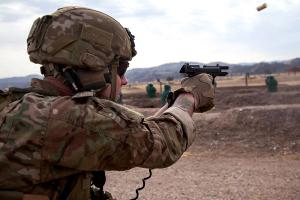 The U.S. Army is moving forward to replace the Cold War-era M9 9mm pistol with a more powerful handgun that also meets the needs of the other services.
As the lead agent for small arms, the Army will hold an industry day July 29 to talk to gun makers about the joint, Modular Handgun System or MHS.
The MHS would replace the Army’s inventory of more than 200,000 outdated M9 pistols and several thousand M11 9mm pistols with one that has greater accuracy, lethality, reliability and durability, according to Daryl Easlick, a project officer with the Army’s Maneuver Center of Excellence at Fort Benning, Ga.
“It’s a total system replacement — new gun, new ammo, new holster, everything,” Easlick said.
The Army began working with the small arms industry on MHS in early 2013, but the effort has been in the works for more than five years. If successful, it would result in the Defense Department buying more than 400,000 new pistols during a period of significant defense-spending reductions. Continue reading
.
.
Thanks to RE for the link. HooRah.
.
1. 30 of the 43 Presidents served in the Army, 24 during time of war, two earned the rank of 5-star General (Washington and Eisenhower) and one earned the Medal of Honor (T. Roosevelt)
2. Less than 28 percent of Americans between the ages of 17-23 are qualified for military service, that’s only about 1-in-4.
3. The U.S. Air Force was part of the Army until 1946. It was called the Army Air Corp.
4. Only one President (James Buchanan) served as an enlisted man in the military and did not go on to become an officer.
5. The Department of Defense employs about 1.8 million people on active duty. It is the largest employer in the United States, with more employees than Exxon, Mobil, Ford, General Motors, and GE combined!
6. The Department of Defense owns 29,819,492 acres of land worldwide.
7. The United States has 737 military installations overseas alone.
8. The Navy’s bell-bottom trousers, are commonly believed to be introduced in 1817 to permit men to roll them above the knee when washing down the decks and to make it easier to remove them in a hurry when forced to abandon ship or when washed overboard. In addition the trousers may be used as a life preserver by knotting the legs and swinging them over your head to fill the legs with air.
9. The Coast Guard seizes 169 pounds of marijuana and 306 pounds of cocaine worth $9,589,000.00 everyday.
10. The Coast Guard is smaller than the New York City Police Department.
11. The Marine Corps motto, “Semper Fidelis,” was adopted in 1883 as the official motto. It is Latin for Always Faithful.
12. The nickname “Leatherneck” originates from the stiff leather stock that early Marines wore around their necks, probably to protect their jugular vein against saber blows.
13. The English Bulldog, also known as “Teufel-hunden,” or “Devil Dogs,” is the unofficial mascot that symbolize the ethos of the Warrior Culture of the U.S. Marines. The U.S. Marine Corps earned this unofficial mascot during World War I, when many German reports called the attacking Marines “teufel-hunden,” meaning Devil-Dogs. “Teufel-hunden” were the vicious, wild and ferocious mountain dogs of German Bavarian folklore.
14. The U.S. Army was in charge of exploring and mapping America. The Lewis and Clark Expedition was an all Army affair. Army officers were the first Americans to see such landmarks as Pike’s Peak and the Grand Canyon.
15. The Air Force’s F-117 fighter uses aerodynamics discovered during research into how bumblebees fly.
So there they are, 15 facts you didn’t know, but now you do. Now you can amaze your friends and family with your knowledge of military trivia.
President Lyndon B. Johnson, Aug. 5, 1964, in a speech at Syracuse University in New York, after a North Vietnames attack on the U.S. Navy in the Gulf of Tonkin:
The world must never forget – that aggression unchallenged is aggression unleashed. We of the United States have not forgotten. This is why we have answered this aggression with action.
 Charlie Company Vietnam 1966-1972