Great Escape Tunnel

Untouched for almost seven decades, the tunnel used in the Great Escape has finally been unearthed.

The 111-yard passage nicknamed ‘Harry’ by allied prisoners was sealed by the Germans after the audacious break-out from the POW camp Stalag Luft III in western Poland.

Despite huge interest in the subject, encouraged by the film starring Steve McQueen, the tunnel remained undisturbed over the decades because it was behind the Iron Curtain and the Soviet authorities had no interest in its significance.
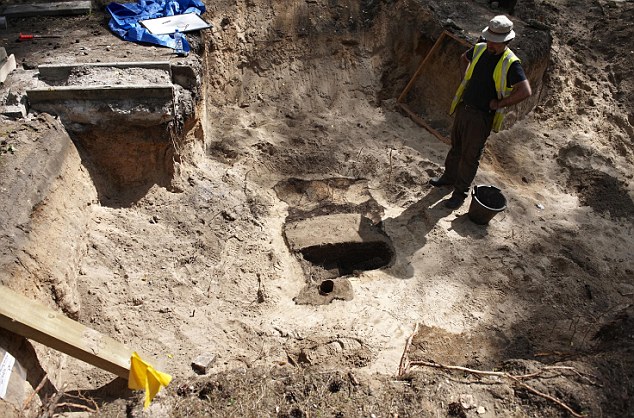
Tony Pollard– head arch (at newly discovered entrance to Tunnel Harry)

But at last British archaeologists have excavated it, and discovered its remarkable secrets.

Many of the bed boards which had been joined together to stop it collapsing were still in position.

And the ventilation shaft, ingeniously crafted from used powdered milk containers known as Klim Tins, remained in working order.

Scattered throughout the tunnel, which is 30ft below ground, were bits of old metal buckets, hammers and crowbars which were used to hollow out the route.

A total of 600 prisoners worked on three tunnels at the same time. They were nicknamed Tom, Dick and Harry and were just 2 ft. square for most of their length.

It was on the night of March 24 and 25, 1944, that 76 Allied airmen escaped through Harry.

Barely a third of the 200 prisoners – many in fake German uniforms and civilian outfits and carrying false identity papers – who were meant to slip away managed to leave before the alarm was raised when escapee number 77 was spotted.
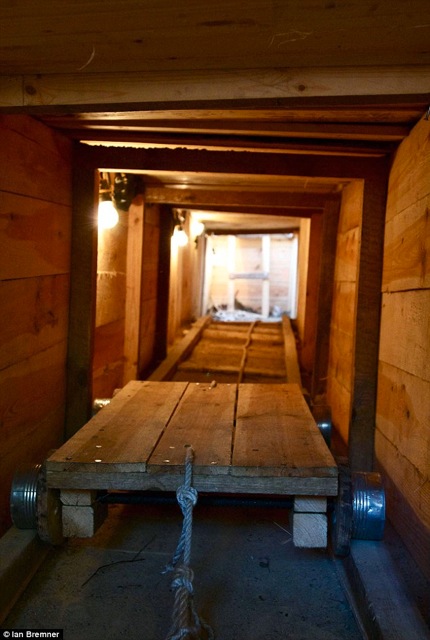
Tunnel vision: A tunnel reconstruction showing the trolley system.

Only three made it back to Britain. Another 50 were executed by firing squad on the orders of Adolf Hitler, who was furious after learning of the breach of security.

In all, 90 boards from bunk beds, 62 tables, 34 chairs and 76 benches, as well as thousands of items including knives, spoons, forks, towels and blankets, were squirrelled away by the Allied prisoners to aid the escape plan under the noses of their captors.

Although the Hollywood movie suggested otherwise, NO Americans were involved in the operation. Most were British, and the others were from Canada, (all the tunnellers were Canadian personnel with backgrounds in mining) Poland, New Zealand, Australia, and South Africa.
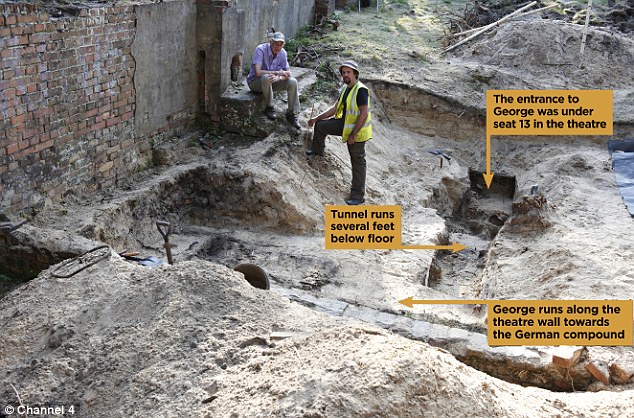
The site of the tunnel, recently excavated by British archaeologists

The latest dig, over three weeks in August, located the entrance to Harry, which was originally concealed under a stove in Hut 104.

The team also found another tunnel, called George, whose exact position had not been charted. It was never used as the 2,000 prisoners were forced to march to other camps as the Red Army approached in January 1945.

Watching the excavation was Gordie King, 91, and RAF radio operator, who was 140th in line to use Harry and therefore missed out.

‘This brings back such bitter-sweet memories,’ he said as he wiped away tears. ‘I’m amazed by what they’ve found.’
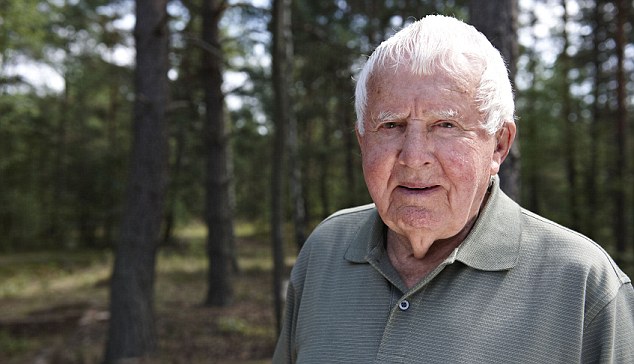
Bitter-sweet memories: Gordie King, 91, made an emotional return to Stalag Luft III.

Thanks to Ron Draper for sending us the information.  Hoo-Rah

5 Lies About the Vietnam War You Probably Believe

When you think about the Vietnam War, there’s a good chance you picture the Hollywood version, complete with long-captive POWs, gobs of bush fighting, and Christopher Walken playing ultra-violent games of Russian roulette. But just as Russian roulette was known to have been played during the war precisely zero times, many of the things you think you know about Vietnam turn out to be complete bullshit, such as the “fact” that …

#5. The Communists Kept American POWs After the War

A Noodle Shop’s Role in Vietnam War

A noodle shop’s role in Vietnam War

The Pho Binh noodle cafe in then-Saigon served as a hide-out for the F100 Viet Cong cell that planned and helped carry out Saigon’s part in the January 1968 Tet offensive, a turning point in the war.

By Mark Magnier, Los Angeles Times

Reporting from Ho Chi Minh City, Vietnam — For decades now, the Pho Binh noodle cafe, tucked behind a tangle of parked motorcycles on Ly Chinh Thang Street, has served its trademark dish — “peace noodles.”

A survivor of Ho Chi Minh City’s relentless real estate makeover, the seven-table eatery ladles out bowl after steaming bowl of the soup, made with strips of beef and piles of rice noodles, fresh basil and cilantro. Many of the appreciative customers are unaware of the very unpeaceful plot that unfolded long ago in the family rooms upstairs. Continue reading

Vietnam War Stories : Documentary

Vietnam War veterans recount their experiences and reflect on their memories of the conflict from five decades ago. For many service members, these experiences still feel like they happened yesterday.

This is not the story of the Vietnam War, but of the men and women who went to Southeast Asia to serve their country. In the voices of a few resonate the stories — each unique, each profound — of the three million who served, the ones who didn’t return and those who passed away before their stories could be told.

WWII Airplanes on Iwo Jima

*51s On Iwo Jima (These are incredible pictures!!)

Note the many B-29’s as well…

It is worth reading the following before you go to the pictures.

  • Don’t use auto run, or click on Slideshow, take your time and scroll thru each pic.
  • Just put your pointer on the picture to get the dropdown info.
  • Click on the picture to see in full size.

Some WWII Iwo Jima photos not normally found in today’s “quick” history updates.

A tiny Island, apparently some amazing crosswinds and quite possibly the volcanic grit did not make the best surface for runway operations.

Here are some of the best WWII pictures I have seen.

Don’t know where they came from.

http://picasaweb.google.com/7thfighter/IwoJima?authkey=Gv1sRgCIW06db_6oth&fe

Thanks to Charlie for the link.  Hoorah

K-9 Blackie

U.S. soldiers sometimes used dogs to help on patrols. This story tells the story of Blackie, the canine with an attitude that would eat almost anything.

Air Force Security Police Squadron K-9 sentry dog handlers patrolled the perimeter of Da Nang Air Base from the early days of the war. These War Dogs were posted at the bases’ interior, along runways, and the perimeter, along with the marines.

…Things started to settle down and I began to fall into the routine: Check the K-9 roster after coming off post to see what assignment Blackie and I had the next evening, go to chow, hit the rack–or have a few beers and then hit the rack. Try to get as much sleep as possible before the heat and noise made it impossible to sleep, (usually around 11 AM). Continue reading

US Army Sniper Program

In the Spring of 1969 9th Infantry Division’s most successful ambush tactic was the sniper mode. This sniper program was initiated in the States and was set in motion as result of a visit to Fort Benning in January 1968. The Army Marksmanship Unit cooperated to the fullest extent, and funds were made available to increase the accuracy of fifty-five M-14 rifles and to provide sniper-scopes. The idea was to get an outstanding training team from the Marksmanship Unit to train 9th Infantry Division soldiers in Vietnam in sniper tactics.

The Army Marksmanship Unit team led by Major Willis L. Powell and consisting of seven non-commissioned officers arrived in Vietnam in June 1968. Upon arrival in the country they revamped the M-16 training methods at the 9th Infantry Division training establishment, the Reliable Academy. Subsequently they supervised the construction of a 500 yard range at Dong Tam and periodically accompanied ambush patrols to assimilate the delta tactics. Progress was slow. Continue reading