Light at the End of the Tunnel

By the end of 1967 an American Army of 485,000 soldiers and marines, backed up by an enormous logistical system, had deployed in country; and officials talked brightly that there was now “light at the end of the tunnel.”

President Johnson, National Security Adviser Walt Rostow, Secretary of State Rusk, JCS Chairman Wheeler, CINCPAC Adm. Ulysses S. Grant Sharp, Ambassador Bunker, and MACV commander General Westmoreland all appeared confident that American ground and air operations were so grinding down Communist forces in Vietnam that they would not be able to maintain anything more than a limited war of attrition. The pronounced gulf between their beliefs and reality deserves representative highlighting. Continue reading
4th Infantry Medal of Honor Recipient

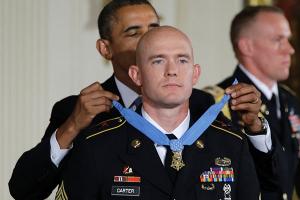
ty-carter-mohArmy Staff. Sgt Ty Carter on Monday became the fifth living recipient of the Medal of Honor from the wars in Iraq and Afghanistan for his valor in helping stop a surrounding enemy force from overrunning a remote outpost in Afghanistan.

“It was chaos, a blizzard of bullets and steel” that Carter and the other defenders faced at Combat Outpost Keating in the 12-hour firefight, President Obama said. But the Americans pushed and ultimately retook the camp. Continue reading

Search and Destroy

The three most basic operations or missions were:

1. Search and destroy,

2. Clearing,

3. Security.

These terms and the concepts they described were new, and like most new names and ideas, they were understood by some and misunderstood by others. Best known and most misunderstood was search and destroy. Search and destroy operations began in 1964, before U.S. ground forces were committed. These operations were conducted to locate the North Vietnamese Army and Viet Cong main force units in and around their base areas and to attack them by fire and maneuver. Since enemy infiltration of the populated areas depended heavily on the availability of base areas near the population centers, destruction of close-in base areas received priority attention. Continue reading

Free-Fire Zone

A free-fire zone was an area that had been cleared of all civilians, with any remaining people assumed to be hostile forces. “Free-fire zone” is also one of those terms that if repeated often enough will make folks dive under the coffee table and hide their heads. Only in Vietnam was political clearance required prior to placing fire on the enemy, that is, clearance from ARVN officials was required for all but clearly defensive fire except into a “free-fire zone.” A free-fire zone, however, did not relieve the commander of his concurrent obligation to comply with the laws of war, operating authorities, and the rules of engagement. Continue reading

US Army Sniper Program

In the Spring of 1969 9th Infantry Division’s most successful ambush tactic was the sniper mode. This sniper program was initiated in the States and was set in motion as result of a visit to Fort Benning in January 1968. The Army Marksmanship Unit cooperated to the fullest extent, and funds were made available to increase the accuracy of fifty-five M-14 rifles and to provide sniper-scopes. The idea was to get an outstanding training team from the Marksmanship Unit to train 9th Infantry Division soldiers in Vietnam in sniper tactics.

The Army Marksmanship Unit team led by Major Willis L. Powell and consisting of seven non-commissioned officers arrived in Vietnam in June 1968. Upon arrival in the country they revamped the M-16 training methods at the 9th Infantry Division training establishment, the Reliable Academy. Subsequently they supervised the construction of a 500 yard range at Dong Tam and periodically accompanied ambush patrols to assimilate the delta tactics. Progress was slow. Continue reading

Gary Tedeschi

We are saddened by the passing of Gary Tedeschi on August 8, 2013.

We were fortunate in having Gary attend our last two Reunions.  Reunion 2013 in Tulsa; and Reunion 2012 in San Antonio.  There are many of us in Charlie Company that can truly say…’he was our buddy’.  Our prayers go out to his family.

The memorial for Gary will be held at

2:30pm

Thursday, October 24, 2013

Riverside National Cemetery

Riverside, California

READ MORE…

Tomb of the Unknowns IV

The Unknown of World War I

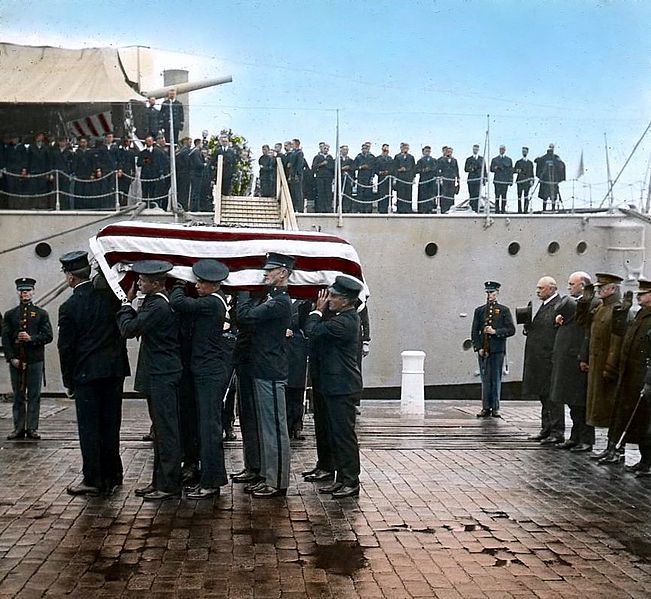
TU-WWIThe World War I Unknown arriving at the Washington Navy Yard, 1921 (colorized)

On Memorial Day, 1921, four unknown servicemen were exhumed from four World War I American cemeteries in France. U.S. Army Sgt. Edward F. Younger, who was wounded in combat, highly decorated for valor and received the Distinguished Service Cross in “The Great War” selected the Unknown of World War I from four identical caskets at the city hall in Châlons-en-Champagne, France, on October 24, 1921. Younger selected the World War I Unknown by placing a spray of white roses on one of the caskets. He chose the third casket from the left. The chosen Unknown was transported to the United States aboard the USS Olympia. Those remaining were interred in the Meuse Argonne Cemetery, France. Continue reading

Tomb of the Unknowns III

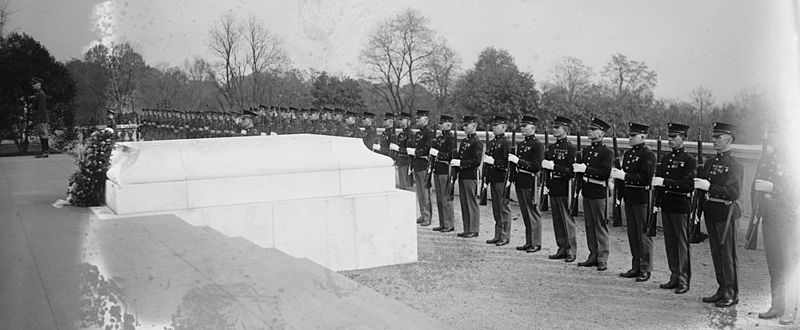
Tomb of 1921

TU-1922Tomb as of November 11, 1922. The Tomb of 1931 would occupy this same location.

On March 4, 1921, the United States Congress approved the burial of an unidentified American serviceman from World War I in the plaza of the new Memorial Amphitheater. On November 11, 1921, the unknown soldier brought back from France was interred inside a three-level marble tomb. The marble came from a Yule Marble Quarry located near Marble, Colorado. The marble for the Lincoln Memorial and other famous monuments was quarried there. The bottom two levels are six marble sections each and the top at least nine blocks with a rectangular opening in the center of each level through which the unknown remains were placed through the tomb and into the ground below. A stone other than marble covers the rectangular opening. Continue reading

Tomb of the Unknowns II

Changing of the Guard

TU-TombGuardChangeChanging of the Guard at the Tomb of the Unknowns. Assistant Relief Commander at left, Guard passing orders in center, and Guard receiving orders at right. The tomb is behind the Assistant Relief Commander.

During the day in summer months from April 1 to September 30, the guard is changed every half hour. During the winter months, from October 1 to March 31, the guard is changed every hour. After the cemetery closes to the public (7 p.m. to 8 a.m. April through September, and 5 p.m. to 8 a.m. October through March), the guard is changed every 2 hours. The ceremony can be witnessed by the public whenever Arlington National Cemetery is open. Continue reading