The M2 Browning Machine Gun

The M2 Browning Machine Gun

The M2 Machine Gun, Browning .50 Caliber Machine Gun, is a heavy machine gun designed towards the end of World War I by John Browning. It is very similar in design to Browning’s earlier M1919 Browning machine gun, which was chambered for the .30-06 cartridge. The M2 uses the larger and more powerful .50 BMG cartridge, which was named for the gun itself (BMG standing for Browning Machine Gun).

Machine_gun_M2_1The M2 has been referred to as “Ma Deuce”, or “the fifty” in reference to its caliber. The design has had many specific designations; the official designation for the current infantry type is Browning Machine Gun, Cal. .50, M2, HB, Flexible. It is effective against infantry, unarmored or lightly armored vehicles and boats, light fortifications and low-flying aircraft. The Browning .50 caliber machine gun has been used extensively as a vehicle weapon and for aircraft armament by the United States from the 1920s to the present. Continue reading

Vietnam – The Last Days

Last Days Some of the Best Ones Die

Though few Americans were paying attention at this late stage of the Indochina War, GIs continue to be killed by enemy action around and after Jan. 27, 1973.  They died in Vietnam, Laos and Cambodia.

Twenty Americans were killed by hostile action in the very last days of operations in the three theaters of the U.S. war.  They represented all services.  Their memories deserve to be preserved despite the rush of history.

Click Here to read the story…  Then go to Page 24

SOURCE: VFW Magazine

‘Until They Are Home’

‘Until They Are Home’: MIA Mission Continues After 40 Years

Tim Dyhouse

January marked the 40th anniversary of the start of the post-war search for missing Gis in Indochina. That mission’s origins are under reported as are the earliest efforts to recover the remains of Americans from overseas wars beginning in 1898. Here is a brief recap.

THE OFFICIAL DOCUMENT that ended America’s military participation in the Vietnam War in 1973 contained a provision that supported a vital VFW priority.

Article 8 of The Agreement on Ending the War and Restoring Peace in Vietnam— also known as the Paris Peace Accords—stipulated that the former combatants would cooperate “to facilitate the exhumation and repatriation” of the remains of war dead. Immediately after the document was signed, the U.S. created the Four-Party Joint Military Team (FPJMT) and the Joint Casualty Resolution Center (JCRC) to carry out Article 8. The FPJMT negotiated details of remains recovery while the JCRC carried out the actual field work. Continue reading

Last Stand at LZ Hereford

Last Stand at LZ Hereford

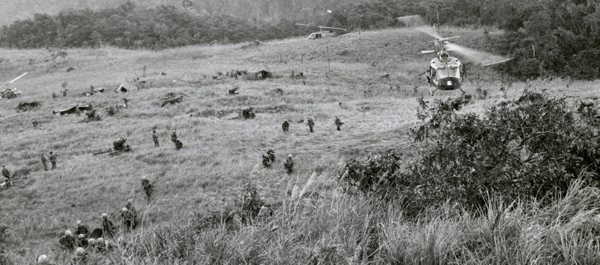
The fight at LZ Hereford was part of Operation Crazy Horse, which began on May 15, 1966, to "find, fix and destroy" the enemy force. (Photo: U.S. Army Heritage and Education Center)
The fight at LZ Hereford was part of Operation Crazy Horse, which began on May 15, 1966, to “find, fix and destroy” the enemy force. (Photo: U.S. Army Heritage and Education Center)

Soldiers shield themselves as best they can from dirt and debris stirred up by a Huey squeezing into the tight, one-ship landing zone around noon. The pilot touches down and two officer’s jump from the helicopter and land in a large mud puddle. One GI chuckles, pokes his buddy and laughs quietly at the officers in fresh jungle fatigues, stamping the mud off their polished boots. A dirty, unshaven captain greets them wearing torn jungle fatigues and mud-covered boots, toting an M-16.

Click here to read more…

War Games

ROTC terror exercise waged in the hills of Santa Clarita

By Mariecar Mendoza
Staff Writer – Pasadena Star News


A
cacophony of gun­shots echoed through the hills of Santa Clarita as soldiers battled it out — armed with paintball guns.

But it wasn’t just a game.

“On campus, we run through the drills that they’re doing right now on the field. But here, we add the paintball guns to it and we find that it adds an extra element of realism to it all,” said Major Vic Stephenson, who oversees the ROTC programs at Cal State Long Beach and UC Irvine. Continue reading

Happy Vietnam Veteran’s Day

Happy Vietnam Veteran’s Day

By Major General Donald Dunbar, Wisconsin National Guard.
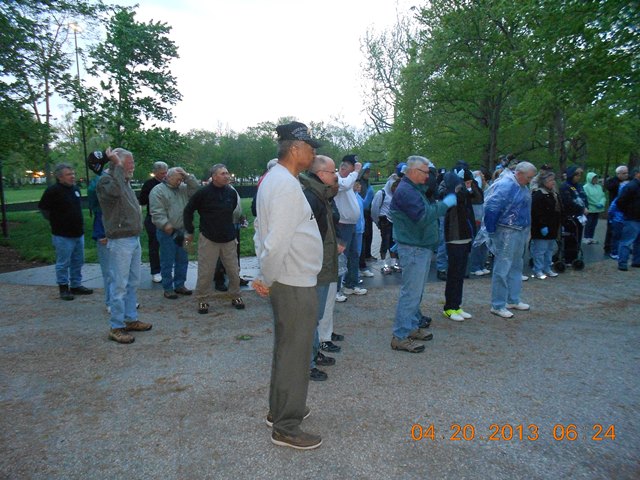
Forty years ago in 1973, the last American combat soldier departed Saigon and ended America’s involvement in the Vietnam War.

Today, we honor our Vietnam veterans — soldiers, sailors, airmen, marines, and coast guardsmen who served our nation with honor and distinction at a very difficult time in our nation’s history, a time of war and a time of social unrest at home, a time when our society failed to distinguish between our nation’s policy and the faithful service of our military. Time has brought perspective, and today our country knows that our Vietnam veterans’ service was extraordinary and that honor was and is due. America has a proud tradition of military service, and the Vietnam chapter in America’s history is just as important to this nation and just as valued as any generation prior or since.

Our Vietnam veterans, like previous generations of veterans who served in time of war, served with valor on the field of battle and came home to make America better. We remember the difficult time during this conflict, but often miss the extraordinary contribution of so many of our Vietnam veterans. They have made America better and stronger, by building our institutions, starting and succeeding in business, serving in office and in our communities, and raising families. And they continue their commitment to the men and women who wear the uniform. They have been at the foundation of America’s commitment today honoring those who have served in our most recent conflict.

How do I know? I see them every time we deploy a unit of the Wisconsin National Guard — a tear in their eye, pride in their gaze, a flag in their hand or on their shirt, and a staunch commitment to supporting this current generation of warriors. America is better not in spite of our Vietnam generation, but because of it. So on behalf of the 10,000 soldiers and airmen of the Wisconsin National Guard, I say to all Vietnam veterans — thank you for your service and commitment to America. You have our respect, our appreciation and our admiration. Our history is freedom’s history and it must be preserved. Each generation must keep the torch of freedom lit and pass it on to the next generation.

You, the Vietnam generation, faced significant challenges as you carried that torch, but you kept it burning and burning brightly. Thank you. —  Major General Donald Dunbar, Wisconsin National Guard.