Veterans and the New Health Care Law
Veterans and the New Health Care Law
Week of October 21, 2013
The Department of Veterans Affairs (VA) sent out a letter a few weeks ago to veterans explaining their options under the Affordable Care Act (ACA). The new law will not change VA benefits. If a veteran is enrolled in VA healthcare, that coverage meets the standards for the ACA’s insurance requirement. Most uninsured veterans are eligible for VA health care. However, not everyone who has served in uniform qualifies for VA health care such as Reserve or National Guard vets who served on active duty for training purposes only. Veterans who are not eligible for VA, and their families, could go to the Health Insurance Exchange. Another option, gaining Medicaid coverage, is limited in states that are not expanding the program. Here are some ways to enroll in VA care or determine your eligibility: (1) visit www.va.gov/healthbenefits/enroll; (2) call 1-877-222-VETS (8387); and (3) visit your local VA health care facility. For more information, visit VA, the Affordable Care Act and You webpage atwww.va.gov/health/aca/.
SOURCE: Military.com


Oklahoma Makes Vet Day Extra Special
Oklahoma may be unique in that it makes mandatory the honoring of veterans throughout its public school system.
As part of its Celebrate Freedom Week, which coincides with the week of Veterans Day, each public school throughout the state conducts an appropriate Veterans Day Assembly program. That entails at least one class period devoted to remembering and honoring America’s veterans.
Moreover, schools may choose to have a one-minute moment of silence beginning at 11 a.m. on November 11 or the next appropriate school day.
Click Here for Veterans Day Community Celebrations
A Noodle Shop’s Role in Vietnam War
A noodle shop’s role in Vietnam War
The Pho Binh noodle cafe in then-Saigon served as a hide-out for the F100 Viet Cong cell that planned and helped carry out Saigon’s part in the January 1968 Tet offensive, a turning point in the war.
By Mark Magnier, Los Angeles Times
Reporting from Ho Chi Minh City, Vietnam — For decades now, the Pho Binh noodle cafe, tucked behind a tangle of parked motorcycles on Ly Chinh Thang Street, has served its trademark dish — “peace noodles.”
A survivor of Ho Chi Minh City’s relentless real estate makeover, the seven-table eatery ladles out bowl after steaming bowl of the soup, made with strips of beef and piles of rice noodles, fresh basil and cilantro. Many of the appreciative customers are unaware of the very unpeaceful plot that unfolded long ago in the family rooms upstairs. Continue reading
Effects of the Tet Offensive
The Tet Offensive
Indeed, with U.S. forces still north at Khe Sanh, the Viet Cong launched the Tet Offensive, the large “general offensive” that Ho Chi Minh and the Vietnamese Communists had been planning for years. On January 30, 1968, on the Vietnamese new year holiday of Tet, separate Viet Cong and NVA cells attacked twenty-seven different U.S. military installations throughout South Vietnam at the same time.
Fighting was intense, but U.S. forces managed to kill or capture the bulk of the Viet Cong raiders within several weeks. The toughest combat occurred in the city of Hue, which the NVA actually conquered for a few weeks before U.S. troops took it back. Fighting occurred as far south as Saigon, taking over the streets. Amid the chaos, an Associated Press photographer captured South Vietnam’s chief of police, Nguyen Ngoc Loan, executing a Viet Cong captain in the streets of Saigon—a brutal image that shocked the American public and became a symbol of the Vietnam quagmire. Continue reading
Bird Dog
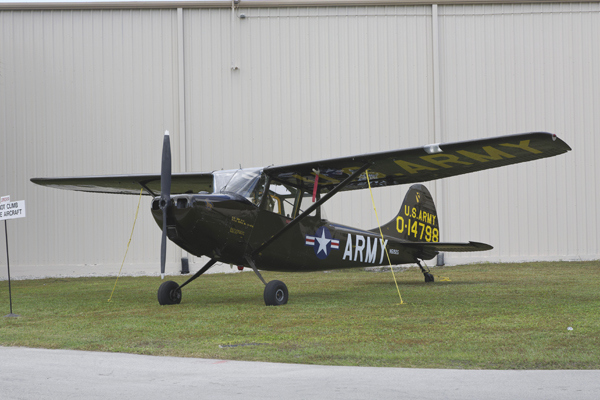 The Cessna L-19/O-1 Bird Dog was the first all-metal fixed-wing aircraft ordered for and by the U.S. Army following the separation of the U.S. Army Air Forces from the Army in 1947, when the service became the U.S. Air Force (USAF). In addition to the U.S. Army and USAF, the Bird Dog served with the Unites States Marine Corps (USMC) and 19 foreign countries.
The Birddog was first built in 1950 by the Cessna Aircraft Company as a military reconnaissance plane. Between 1950 and 1964, 3,398 airframes were built. Originally called the L-19, these planes saw extensive duty during the Korean War from 1950–53, often in the hands of veteran World War II fighter and bomber pilots. The Bird Dog was re-designated the 0-1 in 1962 and was flown in Vietnam until that war ended in 1975. Continue reading
Vietnam War Stories : Documentary
Vietnam War veterans recount their experiences and reflect on their memories of the conflict from five decades ago. For many service members, these experiences still feel like they happened yesterday.
This is not the story of the Vietnam War, but of the men and women who went to Southeast Asia to serve their country. In the voices of a few resonate the stories — each unique, each profound — of the three million who served, the ones who didn’t return and those who passed away before their stories could be told.
Vietnam POWs 40 Years Later
On May 24, 1973, President and First Lady Nixon hosted American Prisoners of War held captive in Vietnam for the largest dinner ever held at the White House.
40 years later, the Richard Nixon Foundation hosted what was perhaps their last reunion gathering. The following is a collection of television and print news coverage.
Recycling RVN
In case you were wondering what happened to all those fuel tanks we jettisoned from our aircraft in Southeast Asia


Courtesy of Charlie – HooRah
 Charlie Company Vietnam 1966-1972