Vietnam-Era Zippo Lighters As Works Of Art

In one Santa Barbara, California gallery, the portraits bring back memories for Vietnam vet Hap Desimone. But they’re not portraits of soldiers, they’re portraits of Zippo lighters.

CBS News correspondent John Blackstone asked him if it seems strange to see the lighters depicted as art.”No,” he says. “It doesn’t seem strange at all.” In Vietnam, every soldier, it seemed, had a Zippo. “I carried one,” Desimone says. “I had it engraved.”With the engravings Zippos became the one place soldiers could express themselves.”A lot of these sentiments I heard before, ‘We’re the unwilling led by the unqualified doing the unnecessary for the ungrateful’,” he says. “It rings a bell.”Zippos by the thousands were left behind in Vietnam. Fifteen years ago artist Bradford Edwards began collecting them at Vietnamese flea markets.

“Here’s an interesting one,” Edwards says, “a broken peace sign on a bracelet.”

In a new book chronicling his work, Edwards explains that each Zippo tells a story – the disgruntled soldier, the lonely soldier, the bored soldier. Edwards became captivated by the engraved Zippos and began recreating them in his own art: larger than life portraits in metal, in stone, in lacquer and mother of pearl.

“When they’re done in this artistic fashion, I think they celebrate and extol the virtues and highlight the carving,” Edwards says.

Just the sound of a Zippo opening is iconic, and Zippos sparked controversy in one of the most famous images from Vietnam.

After Morley Safer reported in August 1965 that a village was lit on fire with lighters, the Zippo became an image of a war going the wrong way. But to Edwards the Zippos are not about the big issues, but about the individual soldier.

“You had people who were discontent people who wanted to express heartfelt emotions,” he says. “And here was a small canvas.”

“They look like a collection of tombstones,” Edwards says. “And they maybe the last thing some of these guys had to say.”

While some of the soldiers may never have made it home, now their Zippos are here illuminating the past.

CLICK to see the news report

Nixon considered using nukes against North Vietnam

Nixon considered using nukes against North Vietnam, declassified documents show

WASHINGTONPresident Nixon, in his first year in office and eager to end an unpopular war that killed tens of thousands of U.S. troops, considered using nuclear weapons against the North Vietnamese, recently declassified documents show. By mid-1969, Nixon and national security adviser Henry Kissinger had settled on a strategy using international diplomacy with threats of force against the communists ruling the north in an attempt to get them to buckle, according to an analysis of the papers by the National Security Archive. The private research group is headquartered at George Washington University.

Kissinger and his staff began developing contingency military plans under the code name of “Duck Hook.” He also created a committee within the National Security Council to evaluate secret plans prepared by Joint Chiefs of Staff in Washington and military planners in Saigon. A pair of declassified documents raised the question of nuclear weapons use in connection with the military operation against the north, which was fighting to reunite with the democratic south, according to the archive.

The first is a Sept. 29, 1969, memo from two Kissinger aides – Roger Morris and Anthony Lake – to Capt. Rembrandt Robinson, who had a central role in preparing the Duck Hook plans. Robinson had prepared a paper for the NSC committee outlining the Joint Chiefs plans to attack North Vietnam.

But the archive says Morris and Lake, unhappy with the document, asked Robinson to rework it to present “clearly and fully all the implications of the (Duck Hook) action, should the president decide to do it.”

They said the president needed to decide in advance “the fateful question of how far we will go. He cannot, for example, confront the issue of using tactical nuclear weapons in the midst of the exercise. He must be prepared to play out whatever string necessary in this case.”

The second document is an Oct. 2, 1969, memo from Kissinger to Nixon, introducing an NSC staff report on the state of military planning for Duck Hook. The report said the basic objective of the operation would be to coerce Hanoi “to negotiate a compromise settlement through a series of military blows,” which would walk the fine line between inflicting “unacceptable damage to their society” and causing the “total destruction of the country or the regime.”

But Nixon abandoned Duck Hook shortly after Oct. 2. Both his secretaries of Defense and State, Melvin Laird and William Rogers, opposed the plan. Nixon apparently also began to doubt whether he could sustain public support for the three- to six-month period the plan might require. He also concluded that his military threats against the North Vietnamese had no effect.

U.S. troops remained in the country throughout Nixon’s first term despite a gradual withdrawal of forces that he began in 1969. Nixon was re-elected in 1972 and secured a cease-fire agreement the following year, but it was never implemented.

Two years later, in 1975, North Vietnamese forces overran the South, reuniting the country under Communist rule.

SOURCE:The Associated Press
Supernatural Event over Vietnam

Airborne Mist: A True Experience

by Robert L. Pollock

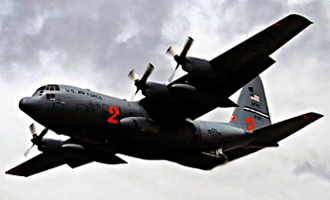
C-130 cargo aircraft - Supernatural event over Vietnam
C-130 cargo aircraft – Supernatural event over Vietnam

In early 1968, during the TET Offensive I was a Loadmaster on a C-130 cargo aircraft attached to the 834th Air division. My crew and I had departed Da Nang enroute to Camh Ranh Bay South Vietnam. The flight time was about 45 minutes, we were flying south just off the coast of Vietnam at twenty-five thousand feet altitude. The aircraft was pressurized and I was seated in the empty cargo compartment taking care of some final paperwork to be turned in when we landed at our destination. This was the last flight of a very long 20-hr day for us. I had the cargo compartment lights on bright white because we had no threat of enemy fire so I could complete the paperwork.

As I sat there I noticed movement at the rear of the boxcar sized empty cargo compartment. I looked and was stunned to see a whirling grey cloudy mass forming at the rear right troop door. The mass was whirling clockwise; it completely filled in the entire rear of the aircraft within seconds. It just hung there like a grey/black curtain. Well, I immediately thought that we had suddenly had a pressurization leak or some kind of high pressure fluid leak that was atomizing the fluid. I asked the engineer over the interphone system if he had any indications of any problem of any kind. He told me “no”. By this time the mist or fog or whatever it was had half the cargo compartment filled. In just a matter of no less than two or three minutes the entire cargo compartment was filled in; all the way to the forward bulkhead.

The engineer and navigator had joined me in the rear of the aircraft where all three of us just continued to back away from the mass as it advanced toward the front of the aircraft. The co-pilot then joined us at the forward crew door area just where the steps were that led into the cockpit. The pilot placed the aircraft in autopilot mode and also joined the rest of us. We could see this grey/black mass in front of us, we were all so amazed. The navigator said “this is spooky”. I remember looking at him almost in anger because I felt sure that whatever it was we were seeing was something to do with the aircraft itself and not something weird or strange.

The engineer went back to his panel to double check on any possible problem with the aircraft systems and found nothing out of the ordinary. I placed my hand into the mass and it just plain disappeared from sight. This stuff was very opaque. The engineer said “come on Load; let’s do a walk around of the cargo compartment”. I quickly agreed, and the two of us stepped into the opaque mass. As soon as I stepped into the mass the lights went out, we had to feel our way along the wall of the aircraft; we were absolutely blind inside that unknown mass. Well, we felt our way around for maybe fifteen minutes with the other three crewmen asking for constant updates as to our welfare.

We got back to the stairwell where the others were at and was at a total loss as to what to do to get rid of the mass filling our aircraft, if it had also filled the cockpit we would have been flying blind with no way to land safely. I have never figured out what that strange grey/black mass was. While I was fully encased inside the mass I had no trouble with my eyes burning as they should have been doing if it was some kind of fluid, it had no odor, and it did not interfere with our breathing either, as it should have, had it been a fluid problem. The only other explanation was that it could have been some kind of pressurization problem, which it was not because that was the very first thought I had and the very first thing the engineer had checked.

I did not feel any kind of threat from the mass except that if it had filled the entire aircraft, we would have been in very desperate trouble. So as we stood there trying to decide what it was and what to do about it, the mass began to go away the way it had appeared, only in reverse. When it got back to the place it had first started forming, it whirled counter-clockwise and then just disappeared into nothing. The five of us were totally dumbfounded about what we had just experienced. By now we were coming up on our destination so got down to the business of going through the pre-landing checklist.

None of us ever mentioned the incident again, even between each other. Why? I am not sure except to say that as seasoned combat crewmen I guess that we (I know, I) just figured that if we lived through it then we did not have to worry about it again. Now, it never really crossed my mind back then; that I would never be able to figure out what it was we had seen that night. But as the years have continued to pass without an answer, the incident has begun to spook me a bit. We all saw that ominous grey/black mass just hanging there in front of our eyes, but just what it could have been stumps me.

We could see it but not smell it, taste it, feel it and it did not irritate our eyes or lungs. So your guess is as good as mine as to what it was. Something that opaque should have had some kind of impact on our bodies, but it did not!

Travelling the Ho Chi Minh Trail

Ho Chi Minh Trail is along travelers’ Vietnam agendas

By Denis D. Gray

HO CHI MINH HIGHWAY, Vietnam – If relentless American bombing didn’t get him, it would take a North Vietnamese soldier as long as six months to make the grueling trek down the jungled Ho Chi Minh Trail. Today, you speed along the same route at 60 mph, past peaceful hamlets and stunning mountain scenery.

The trail, which played an important role in the Vietnam War, has been added to itineraries of the country’s booming tourist industry. Promoters cash in on its history, landmarks and the novelty of being able to motor, bike or even walk down the length of the country in the footsteps of bygone communist guerrillas. Continue reading

Doolittle Raiders Honored

Doolittle Raiders Honored

The Air Force hosted the famed Doolittle Tokyo Raiders’ final toast to their fallen comrades during an invitation-only ceremony Nov. 9 at the National Museum of the U.S. Air Force. The ceremony was attended by three of the four living Doolittle Tokyo Raiders.

On April 18, 1942, 80 men achieved the unimaginable when they took off from an aircraft carrier on a top secret mission to bomb Japan. These men, led by Lt. Col. James H. “Jimmy” Doolittle, came to be known as the Doolittle Tokyo Raiders.

For more information, including instructional materials, read the Air Force’s biography of General James Harold Dolittle, view the video Voices of History: The Doolittle Raiders on You Tube, and visit the National Museum of the Air Force website.

What is a Firebase?

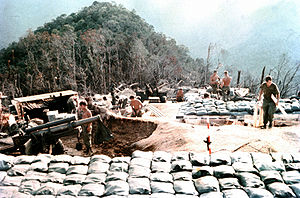
The nonsoldier doesn’t know what a firebase is and to explain it I went to the internet to get some information.  So here is the story:

fire support base (FSBfirebase or FB) is a military encampment designed to provide indirect fire artillery fire support to infantry operating in areas beyond the normal range of direct fire support from their own base camps.

Click to enlarge

An FSB was normally a permanent encampment, though many were dismantled when the units that they supported moved. Their main components varied by size: small bases usually had a battery of six 105 millimeter or 155mm howitzers, a platoon of engineers permanently on station, a Landing Zone (LZ), a Tactical Operations Center (TOC), an aid station staffed with medics, a communications bunker, and a company of infantry. Large FSBs might also have two artillery batteries, and an infantry battalion. Continue reading

Private Military Contractors in Vietnam

CCa

Throughout history, military forces have depended on civilian contractors of one sort or another to give their military personnel flexibility, or to fulfill logistical and support functions that soldiers do not need to do.

In ancient and medieval history up until at least the 1600s, it was not unusual to depend on armies made up primarily of mercenaries and civilian support.  George Washington’s Continental Army depended on civilians for a variety of support roles: transportation, carpentry, engineering, food and medicine. These were logistical functions, considered either menial or too specialized to expect soldiers to do them. Frenchman Marquis de Lafayette was one of the first Military Contractors in the US. In 1777, he purchased a ship, and with a crew of adventurers set sail for America to fight in the American Revolution against British colonial rule. Continue reading

10 Interesting Facts Today About Vietnam

10 Interesting or Trivial Facts about Vietnam you Probably Didn’t Know

#1: Various Names

  • Vietnam is the variation of Nam Viet, which means Southern Viet. Viet Nam was used commonly long ago and is still referred the same way by the United Nations and the Vietnamese Government.

#2: Literacy

  • Vietnam has attained 94% literacy though it is classified as a developing country.
  • Children do not go to schools hearing bells. Schools let them know when it is time by using traditional gongs.
  • Even, the unemployment rates are very low for a developing country. Continue reading