Vietnam War MOH Recipient Looks Back

Vietnam War MOH Recipient Looks Back

Northwest Florida Daily News | Jul 06, 2014 | by Lauren Sage Reinlie

MOH RecipientIn 1964, Ray Donlon, a 30-year-old Special Forces soldier, was sent into the thick of the jungle in Vietnam.

It was his first deployment, but he and the 11 soldiers on the team he was leading had been well-trained and well-prepared.

The soldiers were sent in as advisors to the South Vietnamese. Their job was to train and equip them to fight off the Viet Cong.

The men were excited, as young men are when they travel to a new country, a new culture, and they were filled with hope that they were going to be able to help people help themselves, the now-80-year-old said.

They knew the risks: they could be killed, or, perhaps worse, be captured and taken as prisoners of war.

“We all vowed to each other we would fight until the end,” he said.

On July 6, just six weeks after the team arrived, they faced that test. Continue reading

X-47B

During July 2013 the Navy successfully conducted take-offs and landings from a fairly new nuclear aircraft carrier, the USS George W. Bush, with a new stealth jet called the X-47B.

What is so different about this plane is the fact that it is a ‘drone’.  Yes, it is completely unmanned.  Drones come in all sizes, and the X-47B is likely one of the larger ones.

What is so ironic about all of this is, the fact that the enemy cannot detect a plane like this in the first place.  In the unlikely event they get lucky at shooting one down, there will be no human loss of life or captivity.  As you view the flight deck crew signaling the plane, they are simply signaling the on-board cameras, who in turn are being manned by staff inside the command intelligence center ( CIC ) onboard the ship.

Also check out the short distance this plane needs for a takeoff.  Impressive indeed.

.

.

Thanks to JS for the link. Hoorah

Remembering James Garner — Hollywood’s ‘reluctant hero’

Fast Freddy says:

Veterans from Charlie Company can relate to the military experience of James Garner

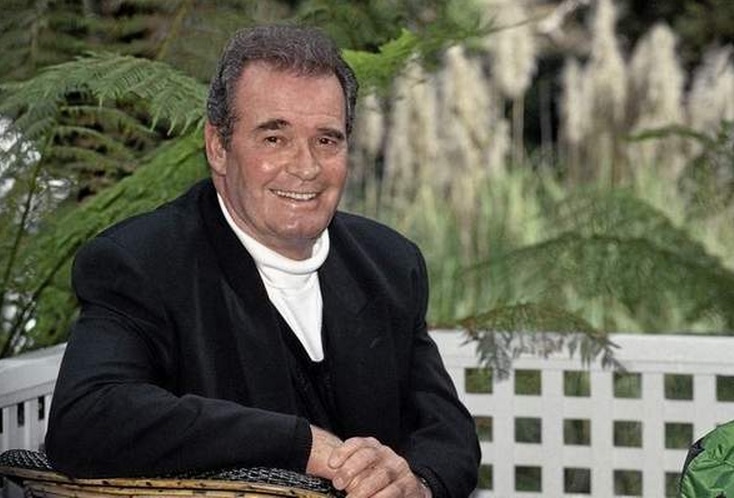
GarnerFILE – Veteran actor James Garner, seen in 2009 file photo taken in Los Angeles.  Actor James Garner, wisecracking star of TV’s “Maverick” who went on to a long career on both small and big screen, died Saturday July 19, 2014 according to Los Angeles police. He was 86. (AP Photo/Nick Ut, File)

By Frank C. Girardot, Pasadena Star-News

In the era of Justin Bieber and Shia LaBeouf, it’s easy for an angry old man sitting behind a computer keyboard to decry modern entertainers

And yet, despite the affliction of age, I know I’m right if I do.

Which is why I say with certainty that our culture lost a great actor and a good man this weekend when James Garner died. Continue reading

Crazy Facts

  • Even decades later the U.S. military is still tracking and arresting deserters  from Vietnam. President Jimmy Carter pardoned  civilian draft evaders in 1977. The pardon did not apply to those already serving in the military.


  • In 1969, in response to one of the largest ever anti-war demonstrations, Richard Nixon wanted  Army helicopters to hover over protesters and blow out their candlelit vigil.

Continue reading

Uniform Descriptions

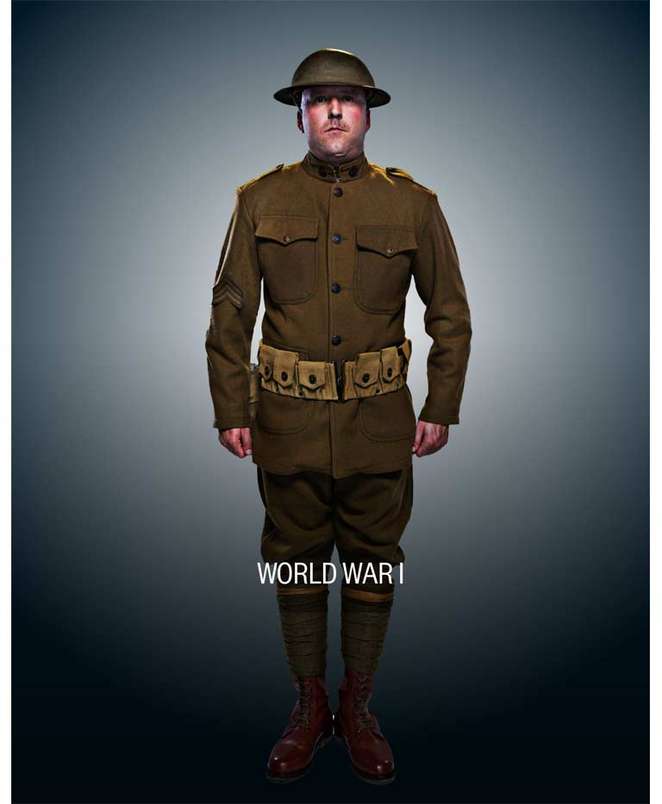
Uni1WWI – Soldiers wore the M1912/17 uniform which ranged in color from medium brown and mustard brown with a hint of green. As the war progressed, the uniforms became greener. They had stand-up collars, four patch pockets with single-point flaps, and steel trench helmets.
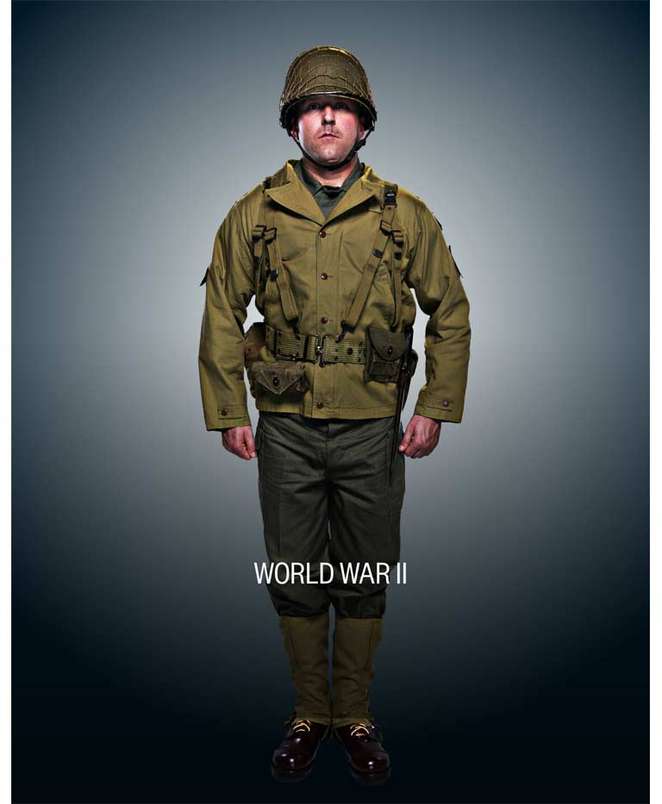
Uni2WWII – In addition to the woolen uniform worn by most U.S. soldiers in Europe, the Herringbone Twill fatigues saw frequent use in the Pacific theater and were eventually adopted by the Marines. The twill material was treated to protect from chemical burns. The first camouflage uniforms, with “Duck hunter” or “Frog” pattern, were also issued toward the end of the war.
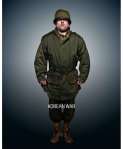
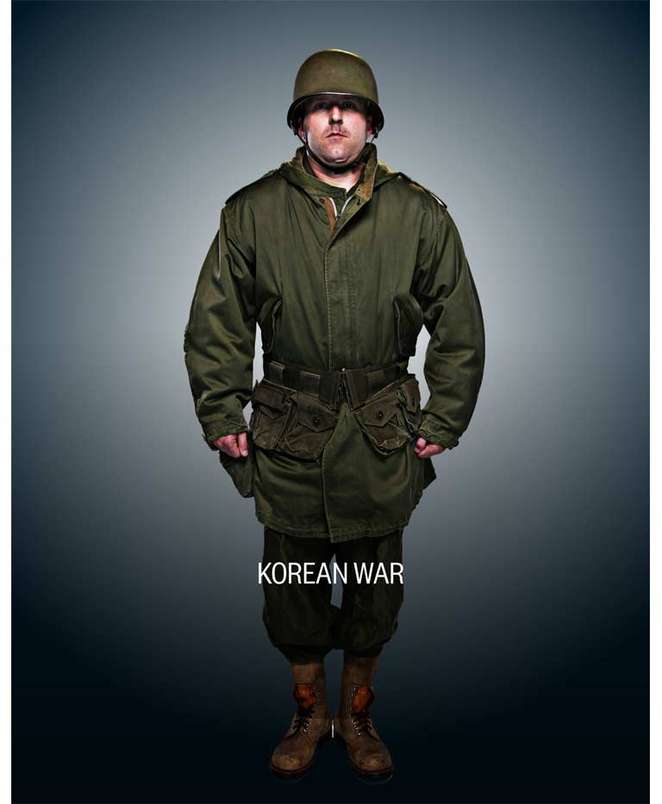
Uni3Korean War – The uniforms of the Korean War were largely the same as WWII, but were modified to withstand the harshKorean winters. Also, in 1949, the U.S. Army separated uniforms into two categories: 1) Garrison and Duty, and 2) Field and Work. The iconic M-1951 Field Jacket was introduced during this time.
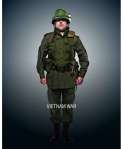
Uni4Vietnam War – By 1963, tropical clothing was produced specifically for fighting in the jungles of Vietnam. Buttons were covered to prevent snagging, and soldiers were issued insect repellant. The newly developed Mitchell camouflage was a reversible pattern for shelter and helmet covers. Though it was not official, Special Forces units also adopted the Vietnamese “Tigerstripe” pattern.
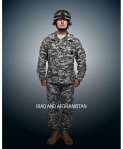
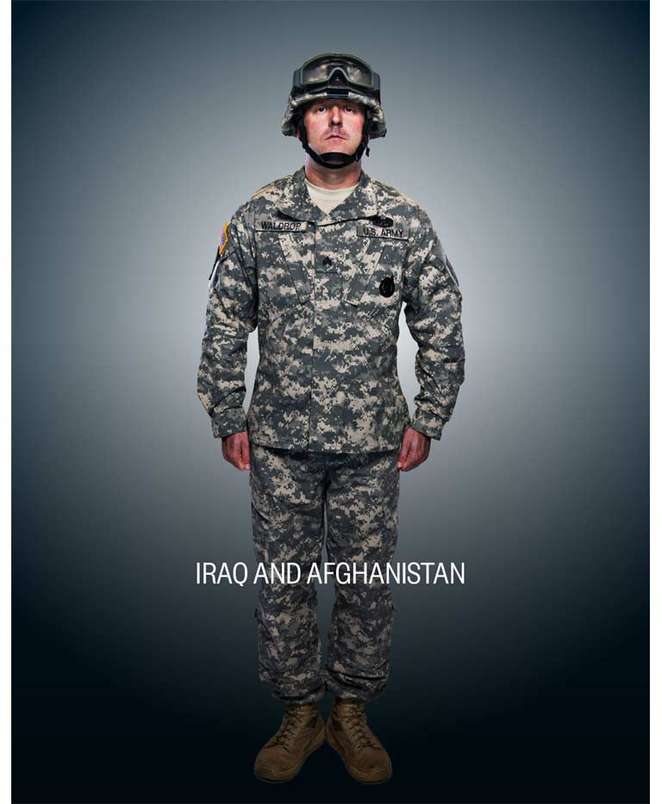
Uni5Iraq & Afghanistan – The Gulf War’s Desert Battle Dress Uniform, often called Cookie-Dough Camouflage, was replaced after a series of field tests in 2003 and 2004 with the current Universal Camouflage Pattern. Its pixilation is based on the Marine Corps’ “MARPAT” pattern. Recently, however, this pattern has been under scrutiny, with soldiers claiming it is ineffective against the rocky terrain of Afghanistan. In March of this year, five design teams were selected to improve upon the military’s uniform. If one proves successful, troops could see a uniform change in the coming years.
Unusual Facts About Vietnam

Here are some unusual facts that you may find hard to find:

  • Vietnam has one the longest free flowing subterranean river in the world at Phong Nha – Ke Bang. The river flows through a huge cave or “grotto.” It is not known how far back the grotto goes (easily a couple miles) or how deep the water is in the grotto. This was also one of the largest North Vietnamese military bases during the Vietnam War and the major starting point of the Ho Chi Minh Trail. The grotto is so big that you can literally fit a small city in side it.
  • Hoan Kiem District of Hanoi has their business district designated with streets specializing in one kind of product or service. i.e. You buy shoes on the “Shoe Street”, Shirts on “Shirt Street”, etc. This has been so for hundreds of years.
  • Halong Bay contains 1,969 limestone islands, and many have grottos in them. It is not known how many grottos there are in the islands of Halong bay or in all of Vietnam. It’s argued that Vietnam has more grottos than any place in the world. It is not known how deep most of these grottos go, due to the lack of technology to find out and the sheer number of them.
  • What you will not read in the tour brochure of the famous Cu Chi Tunnels are the hundreds of bomb craters that ravage the area. Twenty foot wide by six to teen feet deep bomb craters are found everywhere in and around the Cu Chi area. Cu Chi was a major Viet Cong stronghold but is now within the city limits of Ho Chi Minh City. You can take a city bus to visit it.
  • Vietnam repelled three Mongol invasions and was one of the few Asian societies not influenced by the Mongolians (the Japanese were another one). China was conquered by the Mongols during the same time. This is one of many reasons why the Vietnamese are distinctly different from the Chinese.
  • Hanoi is protected from the Red River by a levee. The levee has been in place for hundreds of years. Most of Hanoi would be under 10′-15′ of water if the levee were to break during their rainy season. Such a disaster would make New Orleans look like a bad thunderstorm, because Hanoi is home to more than 6,000,000 people with no realistic means to evacuate most of the population if such would happen.
  • The Vietnamese conquered the Cham empire, who controlled much of South Vietnam before their defeat.
  • The Viet Cong controlled the jungle area South of the Saigon River during the Vietnam War. Much of that area is now being developed into high rise condo buildings and residential housing and bought mostly by the Vietnamese who had fled from the country after the War ended.

Ten Interesting Facts about Vietnam

Ten Interesting Facts about Vietnam

1. Vietnam is the largest exporter of cashews in the world, and the second largest exporter of rice.

2. Instead of bells, traditional gongs are used to call the Vietnamese children to school.

3. Although Vietnam is a developing country, it has a literacy rate of 94%.

4. Among all developing countries, Vietnam has one of the lowest unemployment rates.

5. You can find a B52 American Bomber Wreck in Vietnam’s West Lake.

6. An estimated ten million motor bikes travel on the roads of Vietnam every day.

7. Ruou ran (snake wine), a Vietnamese specialty of rice wine with a pickled snake inside, allegedly can cure any sickness.

8. The most common surname in Vietnam is Nguyen.

9. The Vietnamese keep potbelly pigs as pets.

10.The Vietnamese language has six different tones. A change in tone changes the meaning of the word. This makes their language somewhat difficult to learn.

America’s Bald Eagle

THIS IS ABSOLUTELY FASCINATING AND WORTH YOUR FEW MINUTES TO VIEW….

CHECK OUT THE Bald Eagle video below …

‘Challenger’ is his name (in honor of the lost space shuttle crew) & is cared for by the non-profit American Eagle Foundation (AEF).

He’s a ‘human-socialized’ bird accidentally raised by the people who rescued Him – after being blown from a wild Louisiana nest in a storm as a baby in the late 1980’s.  Declared ‘non-releasable’ by federal and state wildlife Authorities, he was trained by the AEF to perform educational free-flight demonstrations at high profile public events.

He’s the first Bald Eagle in U.S. History that learned to free-fly into Stadiums, arenas and ballrooms during the singing of the Star Spangled Banner. The celebrity eagle has appeared at numerous major sporting events like the World Series, Pro-Bowl, All-Star game, BCS National Championship, Fiesta Bowl, Men’s Final Four, etc.

This eagle named Challenger has also flown before 4 U.S. Presidents!

Thanks to RE for the link. HooRah

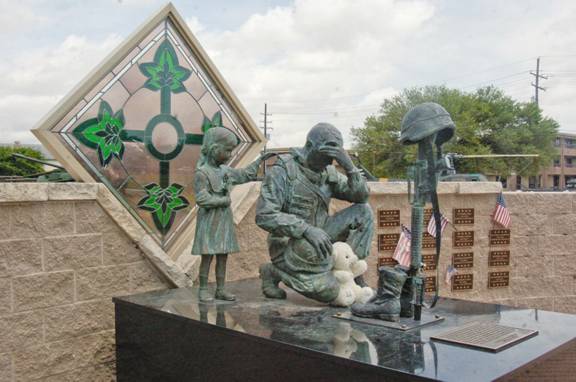
4th Infantry Statue

DO YOU KNOW WHAT THIS IS? OR WHERE THIS IS?

4th Statue

This statue currently stands outside the Iraqi palace, now home to the 4th Infantry division. It will eventually be shipped home and put in the memorial museum in Fort Hood, Texas. The statue was created by an Iraqi artist named Kalat, who for years was forced by Saddam Hussein to make the many hundreds of bronze busts of Saddam that dotted Baghdad.

Kalat was so grateful for the America’s liberation of his country; he melted 3 of the heads of the fallen Saddam and made the statue as a memorial to the American soldiers and their fallen warriors.

Kalat worked on this memorial night and day for several months.

To the left of the kneeling soldier is a small Iraqi girl giving the soldier comfort as he mourns the loss of his comrades in arms.

In The Beginning

In the beginning…

God created Slicks giving them the mission of Medivac, rescue, re-supply and transport and He said this is good, but the Slicks will need protection, so He created Gunships to protect the Slicks and He said this is good, but the Gunships needed targets, so He created Scouts to find targets for the Gunships and He said this is good.

Upon surveying His works, God realized that He needed crews for his creations, so He populated the Slicks with the best and most disciplined Aviators,

He populated the Gunships with lesser disciplined Aviators, and with what was left over He populated the Scouts.

He looked upon His creations and said this is good, now My Slicks will be properly protected and supported in their missions.

God spoke to the assembled Slicks, Gunships and Scouts, saying unto them; go forth and support My most favored creation……….the Grunts.

ANON

…courtesy of Fred Baker [Veterans for a Stronger America]