On May 26, 2008, SGT Raymond Hubbard, (a survivor of a rocket attack in Baghdad that amputated his left leg and severed his carotid artery resulting in a stroke from blood loss.) Gave his most heartfelt speech to date. Speaking about his fallen comrades, his family’s military history, and what the nation needs to do for its soldiers, by the end there was not a dry eye in the crowd.
Author: Fast Freddy
Vietnam Slang
Choose the correct meaning.
The answers appear after the last question, number 10.
1. Ground Pounder
a. a bomb
b. infantryman
c. pilots
2. hootch
a. a bar
b. living quarters
c. a belt
3. horse pill
a. antimalaria pill
b. Vitamin C
c. Vitamin E
4. lifer
a. career soldier
b. a helicopter
c. Heaven
5. maverick
a. a stolen government vehicle
b. ARVN soldier
c. the VC
6. moonshine
a. Saigon Tea
b. a full moon
c. a flare-carrying aircraft
7. native sport
a. hunting for VC
b. hunting tigers
c. sipping tea
8. number ten
a. the best
b. the worst
c. so-so
9. piss tube
a. a tank
b. a jeep
c. a mortar
10. spook
a. civilian intelligence agent
b. a tall tale
c. a dream
Answers: 1-b, 2-b, 3-a, 4-a, 5-a, 6-c, 7-a, 8-b, 9-c, 10-a
TAPS in Tacoma
Every day TAPs is played and the town stops.
C-Rations, Part Deux
A brief history of the C-ration
Beans and Dicks, Ham and MoFos
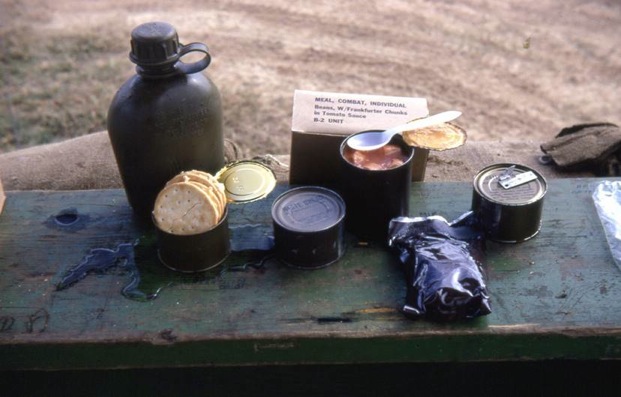
Relished and reviled, C-rations fed millions of troops in the field. The iconic green cans were far from home cooking, but they did sustain a fighting man when he was far from home—or at least the mess hall—until 1981, when they were replaced by the Meal Ready to Eat, or MRE.
“If you were in the field, hungry and you could heat them up, they were great—slightly better than shoe leather,” Dick Thompson, vice president of the Vietnam War Foundation & Museum in Ruckersville, Virginia, and a retired U.S. Army lieutenant colonel, told War Is Boring. “If you were in garrison where you had a choice, forget about it!”
Napoleon once said an army marches on its stomach. In other words, poorly fed troops fight poorly—food is a force multiplier.
But food preservation for long periods of time and the logistics of moving food to troops on the battlefield are two of warfare’s oldest challenges.
The U.S. military is no different. During the 1930s, the War Department did its best to develop several kinds of compact, long-lasting rations that could feed men in combat.
One was the C-ration, first issued in 1939. It was three cans of different meat and vegetables—field manuals of the time described the contents as having “the taste and appearance of a hearty stew”—and three cans containing crackers, instant coffee and sugar. Continue reading

My Name is America
Thanks fo WJM for the link
 Charlie Company Vietnam 1966-1972