And you thought military tanks were made in a factory. Military tank production functions just like soldier production. Here you can see the male of the species mounting the female, and in a few months, we’ll have a whole litter of new tanks.

A number of military slang terms are acronyms. These include SNAFU, SUSFU, FUBAR and similar terms used by various branches of the United States military during World War II and beyond. Continue reading
A former Sergeant, having served his time with Charlie Company, took a new job as a school teacher, but just before the school year started, he injured his back. He was required to wear a plaster cast around the upper part of his body. Fortunately, the cast fit under his shirt and wasn’t even noticeable.
On the first day of class, he found himself assigned to the toughest students in the school. The smart mouthed punks, having already heard the new teacher was a former Charlie Company veteran, were leery of him and decided to see how tough he really was, before trying any pranks.
Walking confidently into the rowdy classroom, the new teacher opened the window wide and sat down at his desk.
When a strong breeze made his tie flap, he picked up a stapler and promptly stapled the tie to his chest.
There was dead silence.
He has had no trouble with discipline this year.
Kit Carson Scouts were former Vietcong guerrillas who had “rallied” to the government, frequently under the Chieu Hoi Program, and who were willing to act as scouts for U.S. units.
New scouts would be closely watched and observed with suspicion, for they could not always be trusted. Some “rallied” only to work for the Vietcong as spies or to lead U.S. units into traps. Though, most were very reliable, risking and often losing their lives for the units they served. Continue reading
Efforts to destroy the National Liberation Front (NLF) included the “Chieu Hoi” (Open Arms) amnesty program begun at the insistence of American and British advisers, including Sir Robert Thompson.
The program, like all others in Vietnam, generated remarkable statistics—almost 160,000 deserters and 11,200 weapons turned in—but only meager results. The program was conducted in classic American fashion with leaflets dropped from the air in NLF-controlled areas and Vietnamese psyops (psychological operations) personnel haranguing peasants via bullhorn from hovering helicopters. Continue reading
III & IV Corps
The southern portion of South Vietnam (Mekong Delta area, III & IV Corps) was mostly hot, humid, swampy, resembling Louisiana and Florida in the United States. This area contained mostly Viet Cong (VC) guerrilla forces. It was too open and too soft to conduct conventional battle; and when the Communists tried to fight in that manner, it often resulted in their quick defeat. This was booby trap, land mine, and sniper, hit & run country.
II Corps
The Central Highlands (II Corps) of South Vietnam approached the terrain and weather of the Midwestern United States; Dry, hilly, hard wood tree forests, creeks & streams, etc. These areas had more organized VC forces, which would conduct the same hit & run ambush tactics, land mines, etc. But, worse, this was mainly NVA territory, where uniformed regular army forces from North Vietnam would establish bases and operations. Big conventional battles would occur in this AO (Area of Operations), “Hamburger Hill”, “Dak To”, “Chu Moor”, and the dreaded A Shau Valley. [Ed Note: This was the area of operations (AO) of Charlie Company]
I Corps
I Corps, was near the DMZ (17th Parallel), this was mainly US Marine Corp territory. They re-took the city of HUE in this AO, during the TET offensive of ’68. I Corps consisted of the Khe Sahn battles, and the first use of NVA tanks (PT-76’s) over-running of the US Green Beret (Special Forces) outpost at Lang Vei in ’68. Many fights in this area were small unit conventional slugging matches with regular NVA units. Small units meaning company sized firefights, (approximately) one hundred men per side.
SOURCE: wiki.answers.com
.
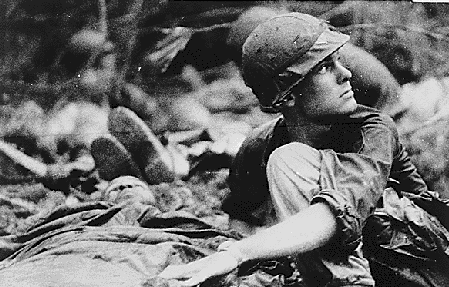 “It Don’t Mean Nuthin’”
A phrase oft repeated in Vietnam, worn paper thin
By soldiers used an awful lot
When it’s gettin’ bricky hot…
Under pressure with lives on the line
Melancholy existence on a definite decline.
“It Don’t Mean Nuthin’, they say”
Turning stone-faced from fears to walk away
As though something’s stolen part of their soul
Left no way sorrow’s grief to console Led too far astray in hell’s battles darkning gray
Forever boyhood humanity to betray…
Staggering memories stored way down deep on the pile
Hidden from the light of day…for awhile!
“But It Don’t Mean Nuthin’” Continue reading
What we still don’t understand is why you Americans stopped the bombing of Hanoi. You had us on the ropes. If you had pressed us a little harder, just for another day or two, we were ready to surrender! It was the same at the battle of TET. You defeated us!
We knew it, and we thought you knew it. But we were elated to notice your media was helping us. They were causing more disruption in America than we could in the battlefields. We were ready to surrender.
You had won!
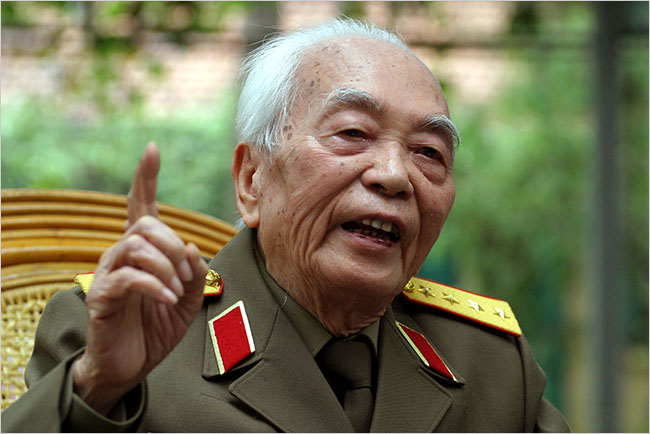
General Giap has published his memoirs and confirmed what most Americans knew. The Vietnam war was not lost in Vietnam : it was lost at home. The same
slippery slope, sponsored by the U.S. media, is currently underway. It exposes the enormous power of a Biased Media to cut out the heart and will of the American public.
A truism worthy of note: . . . Do not fear the enemy, for they can take only your life. Fear the media, for they will destroy your honor.
One fine man probably summarized it best…
It is the soldier, not the reporter, Who has given us freedom of the press.
It is the soldier, not the poet, Who has given us freedom of speech.
It is the soldier, not the campus organizer, Who has given us the freedom to demonstrate.
It is the soldier, Who salutes the flag, Who serves beneath the flag, and whose coffin is draped by the flag, Who allows the protester to burn the flag.”
Father Denis Edward O’Brien, USMC

 Charlie Company Vietnam 1966-1972