Top 10 Things Your Combat Vet Wants You to Know

Top 10 Things Your Combat Vet Wants You to Know

by Regina Bahten

I’m a psychiatrist. Every day I listen to my combat veterans as they struggle to return to the “normal” world after having a deeply life-changing experience. I do everything I can to help them. Sometimes that can involve medications, but listening is key. Sometimes a combat veteran tells me things that they wish their families knew. They have asked me to write something for their families, from my unique position as soldier, wife, and physician. These are generalizations; not all veterans have these reactions, but they are the concerns most commonly shared with me.

(Author’s note: obviously warriors can be female — like me — and family can be male, but for clarity’s sake I will write assuming a male soldier and female family.) Continue reading

One Veteran’s Heroic Quest

COLUMN ONE
Los Angeles Times
October 4, 2012

One veteran’s heroic quest

Doug Sterner has for 14 years been doing what the Pentagon has failed to do: catalog all 350,000 recipients of top medals of valor.

BY DAVID ZUCCHINO REPORTING FROM ALEXANDRIA, VA.

*************************************************************************************

Doug Sterner drives from his cluttered apartment here to the Navy Yard in Washington, D.C., carrying a portable photocopier and a belief in American heroes.

Inside the Navy archives, he flips through thousands of typed index cards detailing bravery in battle. Sterner pulls out a card and starts reading. He’s mesmerized by this story: Continue reading

U.S. Allies in the Vietnam War

Australia

Because of its charter membership in the Southeast Asia Treaty Organization, Australia found herself drawn into the American sphere of influence in the Pacific. And it was a role she did not dislike. After the French defeat at Dien Bien Phu in 1954, the Australians progressively warned the United States that the fall of South Vietnam would threaten democracies throughout Asia. Australian officials believed the domino theory. Continue reading

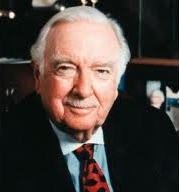
Walter Cronkite

Rising through the journalistic ranks, Walter Cronkite became the preeminent media figure of the 1960s and 1970s as correspondent and anchorman for CBS Television. Born in St. Joseph, Missouri, in 1916, Cronkite was a correspondent for United Press in World War II and joined CBS in 1950, serving as anchor and managing editor of the “CBS Evening News,” 1962-81. Cronkite was extensively watched and respected, and his coverage and reporting of Vietnam was seen as both reflecting and influencing American public opinion. Continue reading

LAMBEAU FIELD

LAMBEAU FIELD

Those who attended the game said it was extremely emotional to see the entire bowl of the stadium turn red, white and blue. It took 90 workers two weeks to get all the colored card boards mounted under each seat. Each piece of card board had eye slits in them so the fans could hold up the colored sheet and still see through the eye slits. Every seat had to have the proper card, with no mistakes, to make this happen.

This is what ESPN failed to show you Monday night Veterans Day 2011.

This slideshow requires JavaScript.

Apparently, they thought their commercials were more important than showing this scene for about 5 seconds.

Gulf of Tonkin Incident (1964)

By August 1964, the United States Navy was supporting South Vietnam’s struggle against North Vietnam in two programs.

Operations Plan (OPLAN) 34 involved South Vietnamese naval and marine forces raiding North Vietnamese coastal installations with American advice and logistical support.

Operation DeSoto involved American naval vessels patrolling international waters off the coast of North Vietnam to observe the North Vietnamese Navy and probe the North Vietnamese radar capabilities by electronic surveillance. The destroyer USS Maddox patrolling 28 miles off the North Vietnamese coast as part of DeSoto came under attack by three North Vietnamese torpedo boats on August 2. Continue reading

Battle of Dien Bien Phu (1954)

General Henri Navarre, the French commander in chief for Indochina, was responsible for the decision to build an outpost in the Red River Delta and its ultimate loss. Dien Bien Phu had been a tranquil crossroads village in northwest Indochina before the French entered it to defeat Vietminh soldiers. The French dropped paratroopers in to build the post since the only roads in were little more than trails, and all of them were controlled by the Vietminh. Continue reading

French Indochina

French Indochina was a federation of French colonies and protectorates in Southeast Asia, part of the French colonial empire. It consisted of Cochin China, Tonkin, Annam, Laos and Cambodia.

France assumed sovereignty over Annam and Tonkin after the Franco-Chinese War (1884–1885). French Indochina was formed in October 1887, from Annam, Tonkin, Cochin China, and the Kingdom of Cambodia; Laos was added in 1893. The federation lasted until 1954. The capital of French Indochina was Hanoi. The French formally left the local rulers in power (Emperors of Vietnam, Kings of Cambodia, Kings of Luang Prabang), but in fact gathered all powers in their hands, the local rulers acting only as figureheads. Continue reading

Tonkin Gulf Resolution

The Senate Debates the Tonkin Gulf Resolution, August 6-7, 1964


To Promote the Maintenance of International Peace and Security in Southeast Asia

Whereas naval units of the Communist regime in Vietnam, in violation of the principles of the Charter of the United Nations and of international law, have deliberately and repeatedly attacked United States naval vessels lawfully present in international waters, and have thereby created a serious threat to international peace; and

Whereas these attacks are part of a deliberate and systematic campaign of aggression that the Communist regime in North Vietnam has been waging against its neighbors and the nations joined with them in the collective defense of their freedom; and

Whereas the United States is assisting the peoples of southeast Asia to protect their freedom and has no territorial, military or political ambitions in that area, but desires only that these people should be left in peace to work out their own destinies in their own way: Now, therefore, be it? Continue reading

When Did the Vietnam War Start and End?

When Did the Vietnam War Start and End?

Possible Answers:

It started in 1954 (the same year the Algerian War for Independence from France began) and ended in 1975. It went on longer in Vietnam until the North Vietnamese took over South Vietnam and made the entire country communist governed. The Vietnamese had been fighting for a lot longer than before the United States stepped in to help.

1. If one could think about direct army involvement then it would be Oct. 27, 1932 U.S. establishes the Military Assistance Advisory Group, Indochina (MAAG) in Saigon to aid the French military (the French had been fighting communist rebels in Vietnam, their pre-WWII colony, since 1945 A.D.).

2. If one could think about direct combat engagement then it would be November 1, 1955 — The U.S. re designates MACG, Indochina, as MACG, Vietnam to specify its new direct combat advisory role with the North Vietnamese Army. The U.S. essentially took over the advisory role from the French, who were leaving Vietnam after their defeat at Diem Bi en Po in 1954. The Department of Defense views this date as the latest qualifying date for inclusion on the Vietnam Veterans Memorial. In fact this allows US military personnel to use live weapons in Vietnam aka ‘to win’!

3. March 1959 — Ho Chi Minh declares a People’s War to unite all of Vietnam under his leadership. His Politburo orders a changeover to an all-out military struggle. From the communist perspective, the “Vietnam War” against the U.S. has now officially started.

4. December 11, 1961 — US. Aircraft carrier “Core” arrives in Saigon with 65 helicopters and 4000 air and ground crewmen assigned to operate them for the North Vietnamese Army. Also, US. Pilots start to train & fly support missions with the North Vietnamese Air Force. This really marks the first larger scale participation of U.S. military “advisers.

5. August 7, 1964 — In response to the incidents involving U.S. naval vessels USS. Maddox and the USS. Turner Joy, the U.S. Congress overwhelmingly passes the “Gulf of Ton-kin Resolution,” allowing the President “to take all necessary steps, including the use of armed force” to prevent further attacks against U.S. forces. Many people view this as the “official” start of the war, although there was never a declaration of war.

6. March 8, 1965 — The first U.S. combat troops arrive in Vietnam, as 3,500 Marines land at China Beach to defend the American air base at Da Nang. They join 23,000 American military advisers already in Vietnam. The arrival of combat troops is considered by some the start of the war, although American military advisers have been in Vietnam for over 10 years. Continue reading