“Spooky”

The Douglas AC-47: Puff the Magic Dragon, Vietnam Gunship

AC-47 Vietnam Call Sign: “Spooky”

Background

In the early-1960s, the Air Force Systems Command began experimenting with fixed-wing, side-firing weapons systems for possible use in Vietnam. By 1964, the first gunship conversion of a World War II Douglas C-47 Skytrain transport was completed under the Project Gunship I program. Initially designated FC-47D (Fighter-Cargo), it was later changed to AC-47D (Attack-Cargo).

On 15 December 1964, the AC-47D, using the call sign “Spooky”, was introduced into combat in Southeast Asia. It was an instant success in breaking up enemy attacks on hamlets and other defensive positions, and within a year, substantial numbers of the rehabilitated “Gooney Birds” were in action throughout the region.

Following the highly successful Project Gunship I combat test program, the U.S. Air Force created the 4th Air Commando Squadron (ACS) in August 1965 as the first operational unit equipped with “Spooky” gunships. Although the 4th ACS was based at Tan Son Nhut AB, it deployed from several forward operating locations throughout South Vietnam (Bien Hoa, Pleiku, Na Trang, Da Nang and Can Tho). In November 1965, the 4th ACS (tailcode EN) was assigned 16 operational aircraft with four more assigned as “advanced attrition” aircraft. Within two years, the 4th ACS and the newly formed 3rd ACS (tailcode EL) were serving under the 14th Air Commando Wing (ACW). In August 1968, the unit designations were changed from “Air Commando” to “Special Operations” (SOS/SOW).

A total of fifty-three C-47Ds were converted for use as gunships during the Vietnam War. Although the AC-47D “Spooky”, commonly referred to as “Puff” (as in “Puff the Magic Dragon”), was an effective attack system, it was also vulnerable to enemy fire. Fifteen aircraft were lost between December 1965 and September 1969.

Features 

The AC-47D was equipped with three 7.62mm SUU-11A Gatling Miniguns mounted in the fifth and sixth windows on the port side of the fuselage and in the aft passenger/cargo door area. Approximately 16,500 rounds of ammunition was carried on a typical mission. Note: The SUU-11As were later replaced by specially designed 7.62mm General Electric MXU-470/A Gatling Miniguns.

For night missions, the aircraft carried approximately 48 MK-24 Mod 3 flares. Each flare could last up to three minutes and produce a light magnitude of two million candlepower. The delivery system was extremely simple, the loadmaster armed and dropped each flare out the cargo door when the pilot signaled by flashing a cargo compartment light. Note: Initially, 30 MK-6 flares of 750,000 candlepower were carried before the MK-24 flares were available.

Airspeed during attack maneuvers was normally 120 knots indicated air speed (KIAS). With the Miniguns firing at a rate of 6,000 rounds per minute, aerial coverage was provided over an elliptical area approximately 52 yards in diameter, placing a projectile within every 2.4 yards during a three-second burst.

A modified adaption of the Douglas C-47 Cargo plane by fitting it with 7.62 mm mini guns that could fire up to 6,000 rounds per minute. The convenience of cargo space allowed for the gunship to carry 54,000 rounds.

While other aircraft would eventually succeed the C-47, such as the C-119 and C-130 with their larger capacity and features, the C-47 pioneered the development of gunships with the first AC-47 during the Vietnam war. It’s Call Sign was “Spooky”.

The AC-47 was capable of putting a highly explosive bullet into every square yard of a football field size target in 3 seconds, and it could do this intermittently while loitering over its same target for hours as long as it had the ammo on board.

It didn’t take long for it to earn the nickname “Puff, the Magic Dragon”, or “Dragonship”. Impressive from a distance, it appeared to roar as never-ending blazes of bright red tracer rounds from its mini guns shot to the ground against a dark background of night.

Enduring and Deadly

In early February of 1965, one Spooky fired 20,500 rounds into a Vietcong position while flying over the Bong Son area, killing some 300 Vietcong troops during a four-hour period.

From the ground at night, the sight resembled that of a fire-breathing dragon, to which the enemy began to refer to as “dragonship”,  and our US troops affectionately nicknamed “Puff the Magic Dragon” or just “Puff”.

Through the years, the military has updated, modified, recreated, and devloped more efficient Gunships.  Modern technology will continue to change, replacing yesterday’s “outdated” machines, but in my mind, “Puff” will never be forgotten and no other gunship will have the pulse racing, fear inducing, state of mind to an enemy that it did, nor the chest swelling pride from people like me.

Spooky saved our butts several times.  It was a fantastic spectacle with its cone of light.  It looked like a stairway.  When we were really in a sh**storm it was comforting to see Spooky in the sky above.

Below are two great videos of “Spooky”

My AC-47 Gunship (Spooky13) Aircraft and Crew

Douglas AC-47 Spooky aka Puff, the Magic Dragon

Now, here are some pictures

Short

Vietnam Veterans know what “short” means – but for those who are not vets, here is the jargon.

.

Short: a term used by everyone in Vietnam to tell all who would listen that his tour was almost over

Short-timer: soldier nearing the end of his tour in Vietnam

Short-timer’s stick: when a soldier had approximately two months remaining on his tour in Vietnam, he might take a long stick and notch it for each of his remaining days in-country. As each day passed he would cut the stick off another notch until on his rotation day he was left with only a small stub.

“I am so short I don’t have time for a long conversation.”

“I am so short, I can play handball against the curb.”

“I am so short I left yesterday.”

Outrageous War Quotes

“I’d rather go down the river with seven studs than with a hundred shitheads”

– Colonel Charlie Beckwith

“We ain’t making no goddamn cornflakes here.”

-Col. Charlie Beckwith, founder of Delta Force

“Tanks are easily identified, easily engaged, much-feared targets which attract all the fire on the battlefield. When all is said and done, a tank is a small steel box crammed with inflammable or explosive substances which is easily converted into a mobile crematorium for its highly skilled crew.”

– Brigadier Shelford Bidwell

“War is God’s way of teaching Americans geography.”

– Ambrose Bierce

“I do not like this word “bomb.” It is not a bomb. It is a device that is exploding.”

French ambassador to New Zealand Jacques le Blanc, regarding press coverage of France’s nuclear weapons tests in the Pacific

“Give a man fire, and he’ll be warm for a day, light a man on fire, and he’ll be warm the rest of his life”

-Staff Sgt. Timothy A. Breen

“Gentlemen, we are being killed on the beaches. Lets go inland and be killed.”

– General Norman Cota: Omaha Beach, 1944

“We are outnumbered, there is only one thing to do. We must attack!”

– Admiral Andrew Cunningham, 11 November 1940. Before attacking the Italian fleet at Taranto

“Army: A body of men assembled to rectify the mistakes of the diplomats.”

– Josephus Daniels

“Onward we stagger, and if the tanks come, may God help the tanks.”

– Col. William O. Darby, U.S. Rangers

“When you men get home and face an anti-war protester, look him in the eyes and shake his hand. Then, wink at his girlfriend, because she knows she’s dating a pussy.”

– Attributed to General Tommy Franks

“War is hell, but actual combat is a motherfucker.”

– Colonel Dave Hackworth’s response to a reporter’s attempt to interview him about a battle

“I never trust a fighting man who doesn’t smoke or drink.”

– Admiral William Halsey

“I was provided with additional input that was radically different from the truth. I assisted in furthering that version.”

Colonel Oliver North, from his Iran-Contra testimony

“Paper-work will ruin any military force”

– Lieutenant-General Lewis B. “Chesty” Puller

“Just drive down that road, until you get blown up”

– General George Patton, about reconnaissance troops

“We should declare war on North Vietnam. . . .We could pave the whole country and put parking strips on it, and still be home by Christmas.”

– Ronald Reagan, 1965

“When I joined the military it was illegal to be homosexual, then it became optional, and now it’s legal. I’m getting out before Obama makes it mandatory.

– Gy. Sgt. Harry Berres, USMC

Air America

Air America was an American passenger and cargo airline established in 1950 and covertly owned and operated by the Central Intelligence Agency’s (CIA) Special Activities Division from 1950 to 1976. It supplied and supported United States covert operations in Southeast Asia during the Vietnam War.

Organization

In August 1950, the CIA secretly purchased the assets of Civil Air Transport (CAT), an airline that had been started in China in 1946 by Gen. Claire Lee Chennault (of Flying Tigers fame) and Whiting Willauer.

In 1951, the parent company of Air America’s forerunner, Civil Air Transport (CAT), was reorganized. The owner, Chennault, was approached by the CIA, who bought out the company through a holding company, the American Airdale Corporation. Under this agreement, CAT was allowed to keep its initials and the company was reorganized as Civil Air Transport, Inc.

On 7 October 1957, American Airdale was reorganized to add another layer of obfuscation to its ownership. The new Pacific Corporation became a holding company for Air Asia Company (Air Asia (Taiwan)), Ltd; Air America, Inc; Civil Air Transport, Inc; Southern Air Transport; Intermountain Aviation; Bird and Sons (known as BirdAir); and Robinson Brothers. CAT attempted to change its name to Air America at the same time, but objections from Air France and American Airlines delayed the name change for two years.

Air America’s slogan was “Anything, Anywhere, Anytime, Professionally”. Air America aircraft, including the de Havilland Canada DHC-4 Caribou and Fairchild C-123 Provider, flew many types of cargo to countries such as the Republic of Vietnam, the Kingdom of Laos, and Cambodia. It operated from bases in those countries and also from bases in Thailand and as far afield as Taiwan and Japan. It also on occasion flew top-secret missions into Burma and the People’s Republic of China.

Air America’s headquarters moved several times during its existence, 808 17th St. NW, (1964), 801 World Center Bldg, (late 1964), 815 Connecticut Ave NW, (July 1968), and 1725 K Street NW, (1972), all in Washington, DC. Marana, Arizona was the principal continental United States maintenance base for Air America of which was located at Pinal Airpark.

Operations during the Vietnam War (Second Indochina War)

From 1959 to 1962 the airline provided direct and indirect support to CIA Operations “Ambidextrous”, “Hotfoot”, and “White Star”, which trained the regular Royal Laotian armed forces. After 1962 a similar operation known as Project 404 fielded numerous U.S. Army attachés (ARMA) and air attachés (AIRA) to the U.S. embassy in Vientiane.

From 1962 to 1975, Air America inserted and extracted U.S. personnel, provided logistical support to the Royal Lao Army, Hmong army under command of Royal Lao Army Major General Vang Pao, and combatant Thai “volunteer” forces, transported refugees, and flew photo reconnaissance missions that provided valuable intelligence on NLF activities. Its civilian-marked craft were frequently used, under the control of the Seventh/Thirteenth Air Force to launch search and rescue missions for U.S. pilots downed throughout Southeast Asia. Air America pilots were the only known private U.S. corporate employees to operate non-Federal Aviation Administration-certified military aircraft in a combat role, although many of them were actually military personnel who had been transferred to the airline.

By the summer of 1970, the airline had some two dozen twin-engine transport aircraft, another two dozen short-take off-and-landing aircraft, and 30 helicopters dedicated to operations in Burma, Cambodia, Thailand, and Laos. There were more than 300 pilots, copilots, flight mechanics, and airfreight specialists based in Laos and Thailand. During 1970, Air America delivered 46 million pounds (21,000 metric tons) of food in Laos. Helicopter flight time reached more than 4,000 hours a month in the same year.

Air America flew civilians, diplomats, spies, refugees, commandos, sabotage teams, doctors, war casualties, drug enforcement officers, drugs, and even visiting VIPs like Richard Nixon all over Southeast Asia. Its non-human passengers were even more bizarre on occasion; part of the CIA’s support operations in Laos, for instance, involved logistical support for local tribes fighting the North Vietnamese forces and the Pathet Lao, their local opponents. Forced draft urbanization policies, such as the widespread application of Agent Orange to Vietnamese farmland created a disruption in local food production, so thousands of tons of food had to be flown in, including live chickens, pigs, water buffalo and cattle. On top of the food drops (known as ‘rice drops’) came the logistical demands for the war itself, and Air America pilots flew thousands of flights transporting and air-dropping ammunition and weapons (referred to as “hard rice”) to friendly forces.

When the North Vietnamese Army overran South Vietnam in 1975, Air America helicopters participated in Operation Frequent Wind evacuating both US civilians and South Vietnamese people associated with the regime from Saigon. The iconic photograph depicting the final evacuation from the “U.S. Embassy” by Dutch photographer Hubert van Es was actually an Air America helicopter taking people off of an apartment at 22 Gia Long Street building used by USAID and CIA employees.

Alleged drug smuggling

Air America allegedly transported opium and heroin on behalf of Hmong leader Vang Pao. This allegation has been supported by former Laos CIA paramilitary Anthony Poshepny (aka Tony Poe), former Air America pilots, and other people involved in the war.

University of Georgia historian William M. Leary, writing on behalf of Air America itself, however claims that this was done without the airline employees’ direct knowledge (except for those employees that said they did know about it) and that the airline itself did not trade in drugs. Curtis Peebles denies the allegation, citing Leary’s study as evidence.

After the war

After pulling out of South Vietnam in 1975, there was an attempt to keep a company presence in Thailand; after this fell through, Air America officially disbanded on June 30, 1976, and was later purchased by Evergreen International Airlines, which continues to provide support for U.S. covert operations.

Airfleet

During its existence Air America operated a diverse fleet of aircraft, the majority of which were STOL capable. There was “fluidity” of aircraft between some companies like Air America, BOA, CASI and the USAF. It was not uncommon for USAF and US Army aviation units to loan aircraft to Air America for specific missions. Air America tended to register its aircraft in Taiwan, operating in Laos without the B- nationality prefix. Ex US military aircraft were often used with the “last three” digits of the military serial as a civil marking, sometimes with a B- prefix. The first two transports of Air America arrived in Vientiane, Laos on 23 August 1959. The Air America operations at Udorn, Thailand were closed down on 30 June 1974. Air America’s operating authority was cancelled by the CAB on 31 January 1974.

Source: Wikipedia

Air America (film)

Air America is a 1990 American action comedy film directed by Roger Spottiswoode, starring Mel Gibson and Robert Downey Jr. as Air America pilots, during the Vietnam War, flying missions in Laos. The protagonists discover their planes are used by other government agents to smuggle heroin; and then, they must avoid being made patsies in a frame-up.

The plot is adapted from Christopher Robbins’ 1979 non-fiction book, chronicling the CIA financed airline during the Vietnam War to transport weapons and supplies within Laos and other areas of Indochina subsequent to the North Vietnamese invasion of Laos. The publicity for the film—advertised as a light-hearted buddy movie—implied a tone that differs greatly with the tone of the actual film, which includes such serious themes as an anti-war political spin, focus on the opium trade, and a negative portrayal of Royal Laotian General Vang Pao (played by actor Burt Kwouk as “General Lu Soong”).

NOW Click here for The Real Air America

Who We Are

If you are a Vietnam vet, you will appreciate and understand Gen. Zinni’s presentation. If not, you will never understand us, what we went through and how we lived our lives since. But watching this short video might give you some insight—and appreciation—to who we really are or were.

There’s only 1/3 of us left now.

.

CLICK – -›  Who We Are         

.
The Spartans do not ask how many the enemies are but where they are.
.
Thanks to Charlie for forwarding this link.

Women in Vietnam

American Nurses

During the Vietnam War, women served on active duty doing a variety of jobs.  Early in 1963, the Army Nurse Corps (ANC) launched Operation Nightingale, an intensive effort to recruit nurses to serve in Vietnam.  Most nurses who volunteered to serve in Vietnam came from predominantly working or middle class families with histories of military service.  The majority of these women were white Catholics and Protestants.  Because the need for medical aid was great, many nurses underwent a concentrated four-month training program before being deployed to Vietnam in the ANC.  Due to the shortage of staff, nurses usually worked twelve-hour shifts, six days per week and often suffered from exhaustion.  First Lieutenant Sharon Lane was the only female military nurse to be killed by enemy gunfire during the war on June 8, 1969.

At the start of the Vietnam War, it was commonly thought that American women had no place in the military.  Their traditional place had been in the domestic sphere, but with the war came opportunity for the expansion of gender roles.  In Vietnam, women held a variety of jobs which included operating complex data processing equipment and serving as stenographers.  Although a small number of women were assigned to combat zones, they were never allowed directly in the field of battle.  The women who served in the military were solely volunteers.  They faced a plethora of challenges, one of which was the relatively small number of female soldiers.  Living in a male-dominated environment created tensions between the sexes.  While this high male to female ratio was often uncomfortable for women, many men reported that having women in the field with them boosted their morale.  Although this was not the women’s purpose, it was one positive result of their service.  By 1973, approximately 7,500 women had served in Vietnam in the Southeast Asian theater.  In that same year, the military lifted the prohibition on women entering the armed forces.

American women serving in Vietnam were subject to societal stereotypes.  Many Americans either considered female in Vietnam mannish for living under the army discipline, or judged them to be women of questionable moral character who enlisted for the sole purpose of seducing men.  To address this problem, the ANC released advertisements portraying women in the ANC as “proper, professional and well protected.”  This effort to highlight the positive aspects of a nursing career reflected the ideas of second-wave feminism that occurred during the 1960s-1970s in the United States.  Although female military nurses lived in a heavily male environment, very few cases of sexual harassment were ever reported.  In 2008, by contrast, approximately one-third of women in the military felt that they had been sexually harassed compared with one-third of men.

Though relatively little official data exists about female Vietnam War veterans, the Vietnam Women’s Memorial Foundation estimates that approximately 11,000 military women were stationed in Vietnam during the conflict.  Nearly all of them were volunteers, and 90 percent served as military nurses, though women also worked as physicians, air traffic controllers, intelligence officers, clerks and other positions in the U.S. Women’s Army Corps, U.S. Navy, Air Force and Marines and the Army Medical Specialist Corps. In addition to women in the armed forces, an unknown number of civilian women served in Vietnam on behalf of the Red Cross, United Service Organizations (USO), Catholic Relief Services and other humanitarian organizations, or as foreign correspondents for various news organizations.

Women, the Unknown Soldiers

Vietnamese Women

Unlike the American women who went to Vietnam, Vietnamese women fought in the combat zone as well as provided manual labor to keep the Ho Chi Minh Trail open; they also worked in the rice fields to provide food for their families and the war effort.  Women were enlisted in both the North Vietnamese Army (NVA) and the VietCong guerrilla force in South Vietnam.

Nguyen Thi Dinh was an example of a woman who had fought most of her adult life against foreign forces in her country. She was a member of the Vietminh fighting against the French and was imprisoned in the 1940s but on her release continued to fight and led a revolt in 1945 in Ben Tre and also in 1960 against Diems government.  In the mid 1960s, she became a deputy commander of the Viet Cong, the highest ranking combat position held by a woman during the war.

Nguyen Thi Duc Hoan, who would later go on to be an actress-director, also joined the fight at a young age and would later become a guerrilla fighter against the Americans, at the time her own daughter was training in the militia.

MOS

About Military Occupational Specialties (MOS)

The U.S. Army used alphanumeric codes (e.g., 11B10, Light Weapons Infantryman) to identify the Military Occupational Specialty (job) each person held. The MOS that a person was qualified in was called the PMOS (primary MOS), while the DMOS (duty MOS) was the job they actually held at a given time.

Different MOS coding systems were used for enlisted, warrant officers and officers:

Enlisted codes consisted of five digits. The first three (e.g., 11B) indicated the position while the fourth and fifth indicated the relative level:

xxx10 – basic Infantryman (E1-E3) = 11B10

xxx20 – specialist (Specialist 4th Class, E-4) = 11B20 (Note: some SP5s were 20s, e.g., 63B20, 91B20, 94B20)

xxx30 – team leader, specialist (E-5) = 11B30 (A number of SP5 positions had “30” MOS codes, including 64C30).

xxx40 – noncommissioned officer (Sergeant E-5, Staff Sergeant E-6, Sergeant First Class E-7) = 11B40

xxx50 – senior noncommissioned officer (E-8, E-9) = 11B50 (or, as we shall see, 11B5M, first sergeant)

Where the individual held a Special Qualification Identifier (SQI) for special training or skills, the last character was an alphabetic SQI Code that indicated the qualification (e.g., in 11B1P. the “P” indicates “parachutist”)

Warrant Officer MOS Codes were also 5 digits, but the first four (e.g., 631A) indicated the position, with the last available for an SQI suffix.

Commissioned Officer codes were numerical; four digits indicated MOS (e.g., 1542, Infantry Officer) and an optional one digit SQI prefix indicated a special qualification (e.g., 71542, Jump-qualified Infantry Officer).

The U.S. Army changed the MOS coding structure sometime in the 1980s, so the MOS codes which we held are now part of history. While MOS codes can be useful especially when visiting the Wall or searching through the casualty database, they can be fairly hard to find these days.

Most of us in Charlie Company were 11B or 11Bravo, or AKA Straight-leg Infantry, or Ground-pounders, or The Queen of Battle (Inside joke), or in one specific case “A Perimeter Grunt.” 

Post-War Effect on the United States

In the post-war era, Americans struggled to absorb the lessons of the military intervention.  As General Maxwell Taylor, one of the principal architects of the war noted “first, we didn’t know ourselves.  We thought that we were going into another Korean War, but this was a different country. Secondly, we didn’t know our South Vietnamese allies… And we knew less about North Vietnam.  Who was Ho Chi Minh?  Nobody really knew.  So, until we know the enemy and know our allies and know ourselves, we’d better keep out of this kind of dirty business. It’s very dangerous.”

Some have suggested that “the responsibility for the ultimate failure of this policy [America’s withdrawal from Vietnam] lies not with the men who fought, but with those in Congress…”  Alternatively, the official history of the United States Army noted that “tactics have often seemed to exist apart from larger issues, strategies, and objectives.  Yet in Vietnam the Army experienced tactical success and strategic failure… The…Vietnam War…legacy may be the lesson that unique historical, political, cultural, and social factors always impinge on the military…Success rests not only on military progress but on correctly analyzing the nature of the particular conflict, understanding the enemy’s strategy, and assessing the strengths and weaknesses of allies.  A new humility and a new sophistication may form the best parts of a complex heritage left to the Army by the long, bitter war in Vietnam.”

U.S. Secretary of State Henry Kissinger wrote in a secret memo to President Gerald Ford that “in terms of military tactics, we cannot help draw the conclusion that our armed forces are not suited to this kind of war.  Even the Special Forces who had been designed for it could not prevail.”  Even Secretary of Defense Robert McNamara concluded that “the achievement of a military victory by U.S. forces in Vietnam was indeed a dangerous illusion.”

Doubts surfaced as to the effectiveness of large-scale, sustained bombing.  As Army Chief of Staff Harold Keith Johnson noted, “If anything came out of Vietnam, it was that air power couldn’t do the job.”  Even General William Westmoreland admitted that the bombing had been ineffective.  As he remarked, “I still doubt that the North Vietnamese would have relented.”

The inability to bomb Hanoi to the bargaining table also illustrated another U.S. miscalculation. The North’s leadership was composed of hardened communists who had been fighting for independence for thirty years.  They had defeated the French, and their tenacity as both nationalists and communists was formidable. Ho Chi Minh is quoted as saying, “You can kill ten of my men for everyone I kill of yours…But even at these odds you will lose and I will win.”

The Vietnam War called into question the U.S. Army doctrine.  Marine Corps General Victor H. Krulak heavily criticized Westmoreland’s attrition strategy, calling it “wasteful of American lives… with small likelihood of a successful outcome.”  As well, doubts surfaced about the ability of the military to train foreign forces.

Between 1965 and 1975, the United States spent $111 billion on the war ($686 billion in FY2008 dollars). This resulted in a large federal budget deficit.

More than 3 million Americans served in the Vietnam War, some 1.5 million of whom actually saw combat in Vietnam.  James E. Westheider wrote that “At the height of American involvement in 1968, for example, there were 543,000 American military personnel in Vietnam, but only 80,000 were considered combat troops.”  Conscription in the United States had been controlled by the President since World War II, but ended in 1973.”

By war’s end, 58,220 soldiers were killed, more than 150,000 were wounded, and at least 21,000 were permanently disabled.  According to Dale Kueter, “Sixty-one percent of those killed were age 21 or younger.  Of those killed in combat, 86.3 percent were white, 12.5 percent were black and the remainder from other races.”  The youngest American KIA in the war was PFC Dan Bullock, who had falsified his birth certificate and enlisted in the US Marines at age 14 and who was killed in combat at age 15.  Approximately 830,000 Vietnam veterans suffered symptoms of post traumatic stress disorder.  An estimated 125,000 Americans fled to Canada to avoid the Vietnam draft, and approximately 50,000 American servicemen deserted.  In 1977, United States President Jimmy Carter granted a full, complete and unconditional pardon to all Vietnam-era Draft dodgers.  The Vietnam War POW/MIA issue, concerning the fate of U.S. service personnel listed as missing in action, persisted for many years after the war’s conclusion.

A Right to Serve in the Military

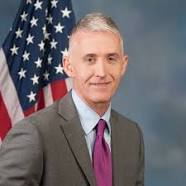
Trey Gowdy just said a few things about the military in response to a stupid question from a CNN reporter about the ban of transgenders. He nails it!

Nobody has a “right” to serve in the Military. Nobody. What makes people think the Military is an equal opportunity employer? Very far from it.

The Military uses prejudice regularly and consistently to deny citizens from joining for being too old or too young, too fat or too skinny, too tall or too short. Citizens are denied for having flat feet, or for missing or additional fingers. Poor eyesight will disqualify you, as well as bad teeth. Malnourished? Drug addiction? Bad back? Criminal history? Low IQ? Anxiety? Phobias? Hearing damage? Six arms? Hear voices in your head? Self-identify as a Unicorn? Need a special access ramp for your wheelchair? Can’t run the required course in the required time? Can’t do the required number of pushups? Not really a “morning person” and refuse to get out of bed before noon? All can be reasons for denial.

The Military has one job. War. Anything else is a distraction and a liability. Did someone just scream “That isn’t Fair”? War is VERY unfair, there are no exceptions made for being special or challenged or socially wonderful. YOU change yourself to meet Military standards.. Not the other way around. I say again: You don’t change the Military… you must change yourself. The Military doesn’t need to accommodate anyone with special issues. The Military needs to Win Wars.

If any of your personal issues are a liability that detract from readiness or lethality… Thank you for applying and good luck in future endeavors. Who’s next in line?

Bizarre Intelligence

Cockroaches – Gross facts and information!

Cockroaches are so hardy that they can even live nine days without their heads before they starve to death.  But, you knew that, right?

For those who think nothing good ever comes from cockroaches, during the Vietnam War, the U.S. used cockroaches to detect farmers who were doubling as Communist guerrillas.

First, suspected Vietcong guerrilla meeting places were sprinkled with synthetic female cockroach pheromones.

Then, questionable Vietnamese farmers were made to walk slowly past cages containing male cockroaches. If a farmer had visited the meeting place earlier, the female scent on him would make the male cockroaches react. I bet you didn’t know that, right?